See the Problem Before Choosing the Repair
Sewer Camera and Video Pipe Inspections in Orange County, California
A sewer line can back up for several different reasons. The pipe may be packed with grease, filled with roots, restricted by cast iron scale, cracked, offset, holding water, or beginning to collapse. From the surface, many of these problems look the same.
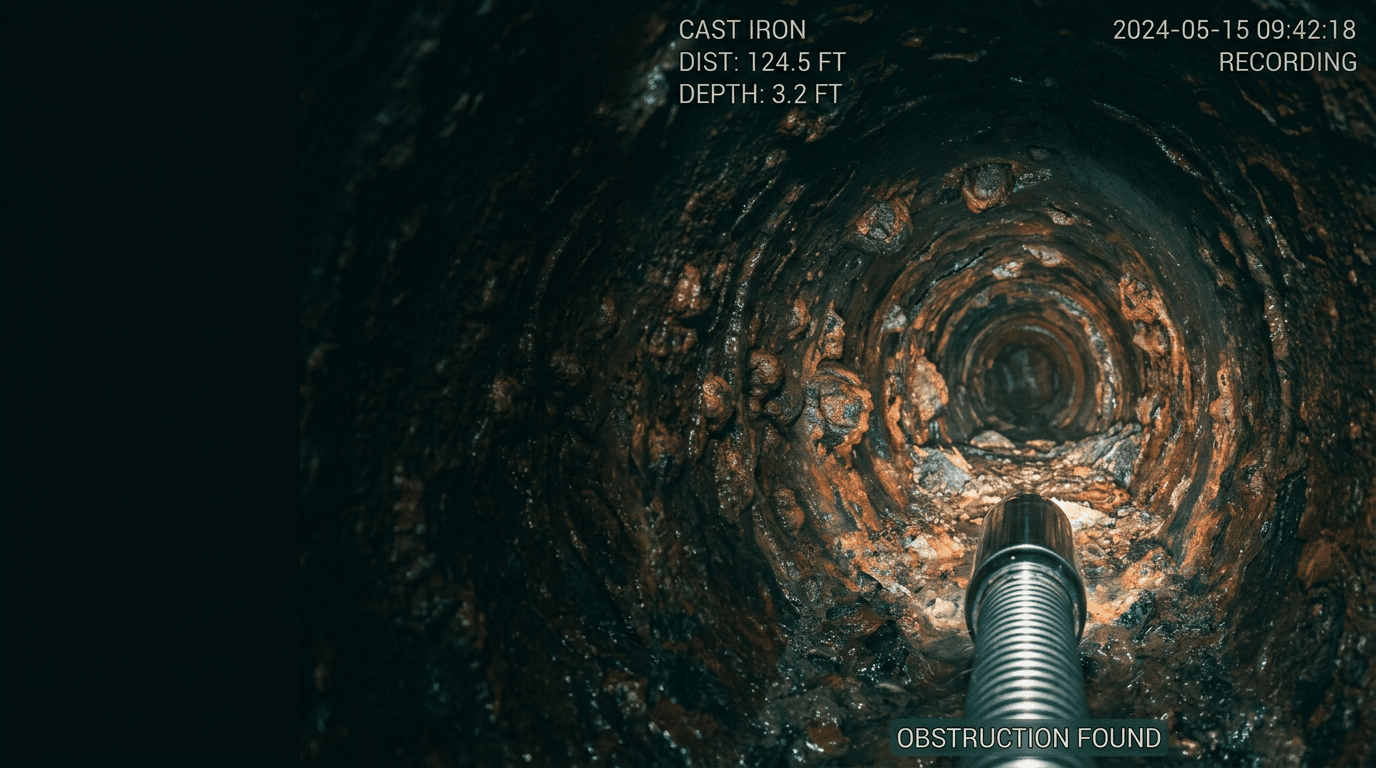
Jetters N' Drains uses professional sewer camera equipment to inspect the inside of drain and sewer lines, identify visible defects, locate problem areas, and document the condition before cleaning or repair is recommended.
We inspect the pipe, show the customer what is visible, and use those findings to build the next step.
A camera inspection is a visual condition assessment. Some blockages must be cleared before the full pipe can be inspected.
The Problem
The Same Sewer Symptom Can Have Several Different Causes
A slow drain does not automatically mean grease.
A recurring backup does not automatically mean roots.
Standing water does not automatically mean a collapsed pipe.
The visible symptom tells us where to begin. The camera helps us see what is actually happening inside the line.
Without inspection, a property owner may keep paying to clear the same blockage without learning why it returns. They may also be told to replace a pipe that could be cleaned or rehabilitated.
Jetters N' Drains uses video inspection to separate the immediate stoppage from the underlying pipe condition.
Recurring Blockage
The same location may repeatedly clog because roots, scale, a crack, an offset, or a rough pipe surface continues catching debris.
Slow Flow
The usable opening may be restricted by grease, corrosion, mineral deposits, sludge, or pipe deformation.
Multiple Fixture Backup
Several fixtures backing up together often points to a larger building drain or sewer lateral problem.
Standing Water
Water visible in the line may indicate poor slope, a belly, an obstruction, or downstream restriction.
Sewer Odor
A damaged connection, stagnant material, open defect, or drainage problem may contribute to recurring odor.
Previous Repair Failure
The camera may reveal a failed patch, misaligned repair, incomplete cleaning, separated coupling, or damaged liner termination.
When to Inspect
When a Sewer Camera Inspection Makes Sense
A video inspection is useful when the symptoms suggest a problem beyond a simple fixture clog or when the condition of the pipe must be confirmed before work begins.
- the same drain or sewer line keeps backing up
- hydro jetting or cabling only provides temporary relief
- roots have been removed more than once
- several fixtures drain slowly at the same time
- toilets gurgle when another fixture is used
- wastewater appears in a shower, tub, floor drain, or cleanout
- an older home contains cast iron or clay sewer pipe
- a property owner is considering trenchless lining
- a contractor needs to locate a buried defect
- a commercial property has recurring drain complaints
- a buyer wants more information about the sewer lateral
- a renovation may affect existing drain piping
- a line needs post-cleaning verification
- a completed repair needs final visual documentation
- the pipe route or connection layout is unclear
A camera inspection can show visible pipe conditions. It cannot see through standing wastewater, heavy buildup, or a complete blockage until the line is opened.
How It Works
What a Professional Sewer Camera Inspection Does
A sewer camera is a waterproof camera head connected to a flexible push cable or specialized inspection platform. The camera is introduced through a cleanout, drain opening, manhole, removed fixture connection, or other suitable access point.
As the camera travels through the pipe, the technician watches the interior in real time.
The inspection may show:
- pipe material
- estimated diameter
- joints and fittings
- branch connections
- roots
- grease
- corrosion
- scale
- cracks
- holes
- offsets
- deformation
- standing water
- previous repairs
- liner condition
- foreign objects
- active infiltration where visible
- changes in pipe size or direction
Technical note
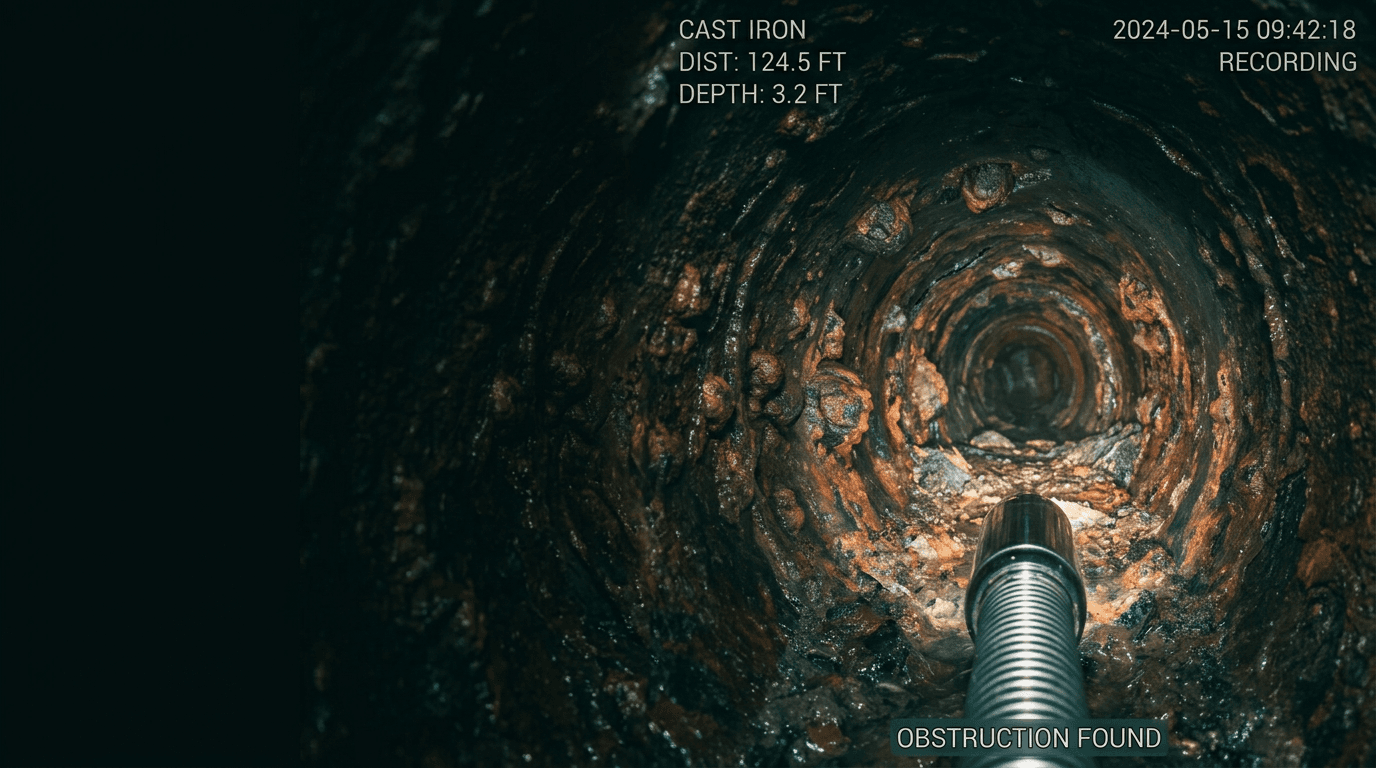
The camera records what is visible from inside the pipe. Accurate interpretation still depends on clean access, usable lighting, controlled movement, pipe cleanliness, and technician experience.
Defect Identification
What Jetters N' Drains Looks for Inside the Pipe
The purpose is not simply to record video. The purpose is to identify conditions that explain the problem and affect the repair plan.
Root Intrusion
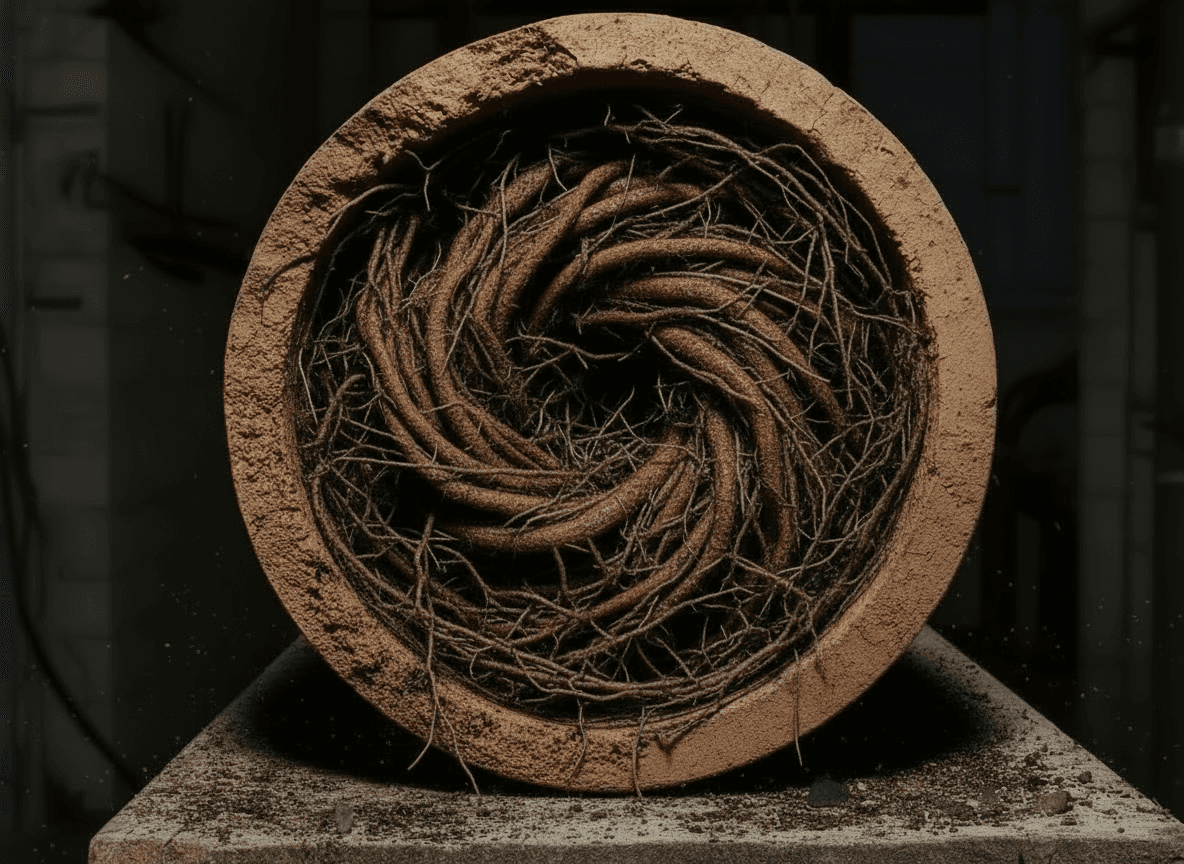
Roots may appear at cracks, joints, transitions, service connections, or deteriorated pipe sections. The amount and location help determine whether cleaning, maintenance, lining, or excavation is appropriate.
Cracks
Longitudinal, circumferential, and irregular cracks can indicate pipe deterioration, movement, loading, or localized failure.
Separated Joints
A visible gap between pipe sections can allow roots, groundwater, soil, and debris into the line.
Offsets
One pipe section may shift relative to the next. Minor offsets may still allow flow. Major offsets can catch waste, restrict equipment, or prevent lining.
Corrosion
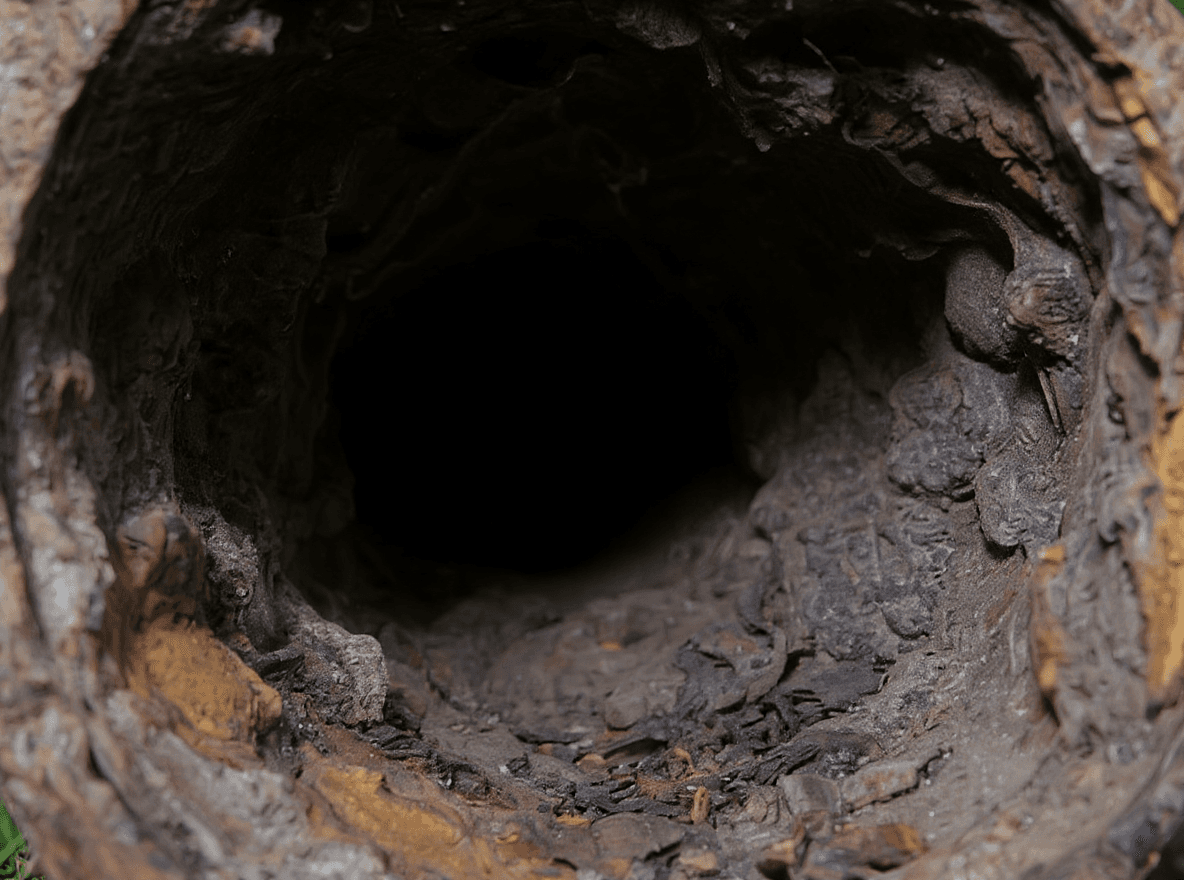
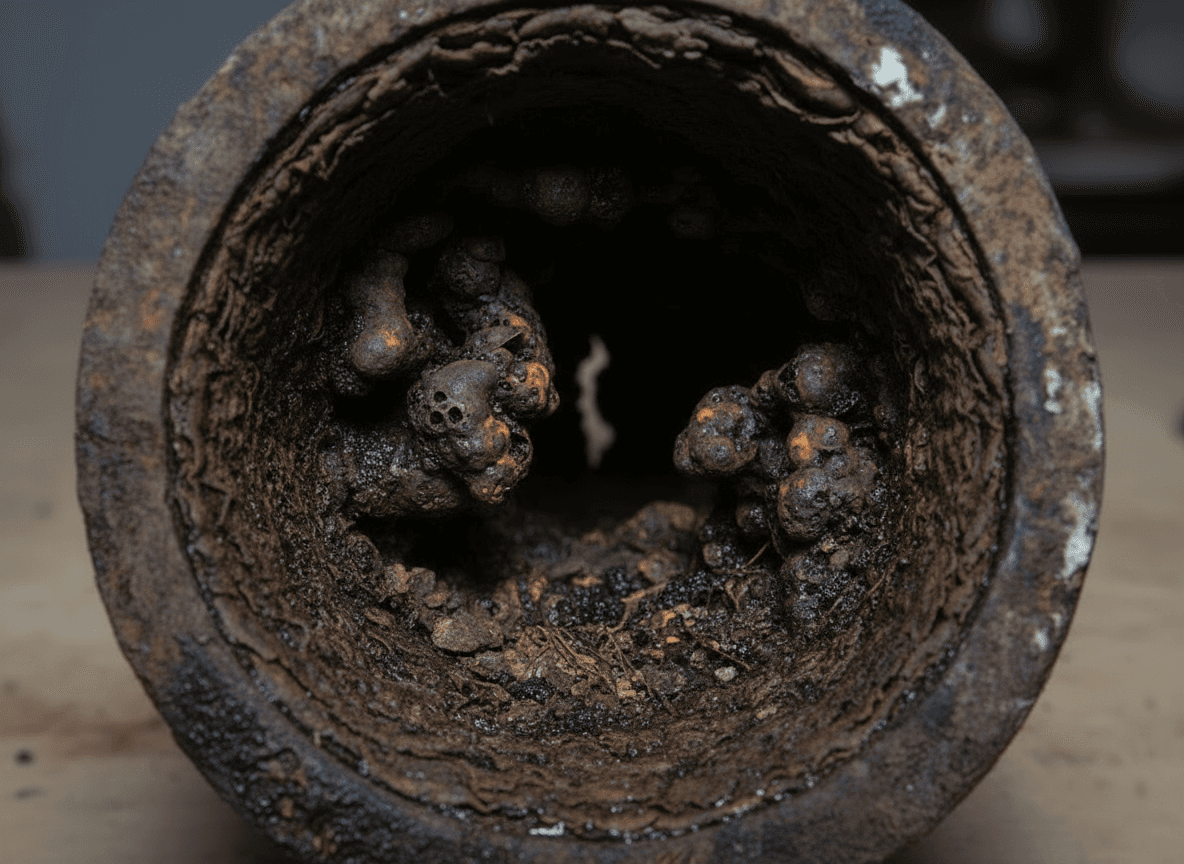
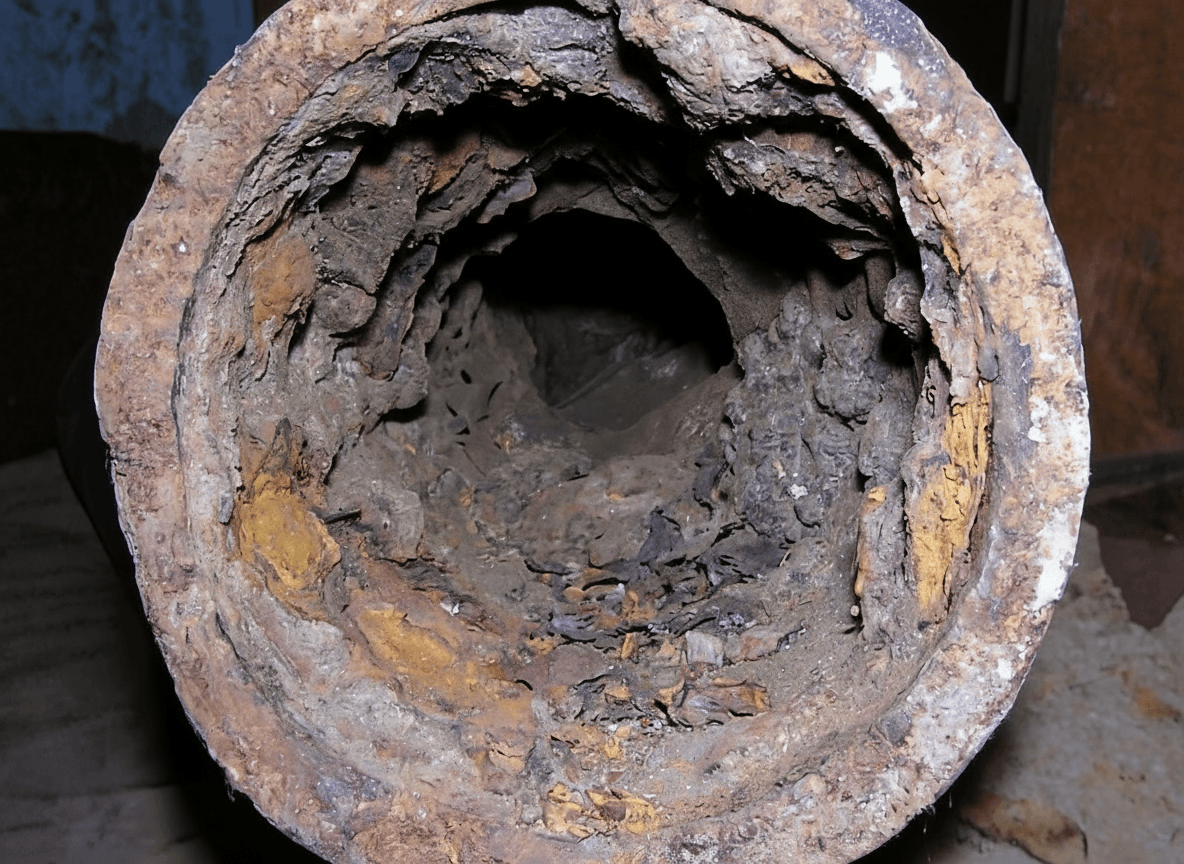
Cast iron may show pitting, roughness, scale, channeling, holes, and severe wall loss.
Scale Buildup
Heavy mineral and corrosion deposits can reduce the usable diameter and hide defects below the buildup.
Standing Water
Water remaining in the pipe may suggest a low section, slope problem, obstruction, deformation, or downstream restriction.
Deformation
PVC, clay, Orangeburg, cast iron, and other materials can become oval, crushed, warped, or displaced.
Holes and Missing Wall
Severe corrosion or damage may leave localized openings where soil, water, or roots enter.
Grease and Sludge
Soft buildup can coat the walls, reduce flow, and hide the pipe surface.
Foreign Objects
Wipes, rags, construction debris, tools, broken fittings, and other objects may become lodged in the line.
Previous Repairs
The camera may reveal couplings, patches, liners, cut-in fittings, open transitions, or repair sections that need further evaluation.
Equipment and Access
Different Pipes Require Different Inspection Equipment
No single camera setup is correct for every system. Small branch drains, residential sewer laterals, large commercial lines, vertical stacks, and mainline sewers require different access, cable lengths, camera heads, lighting, steering capability, and recording methods.
Push Camera Systems
Flexible push cameras are commonly used for residential sewer laterals, building drains, and accessible branch piping.
Mini Camera Systems
Smaller camera heads may be used in tighter lines where diameter and access permit.
Self-Leveling Camera Heads
The display remains oriented as the camera moves through the pipe, making the inspection easier to interpret.
Sonde and Locating Capability
A transmitter in the camera head can help locate the camera from the surface and estimate the position and depth of a defect.
Recording and Still Images
Video and selected still images can document visible conditions and support repair planning when the project scope includes documentation.
Distance Tracking
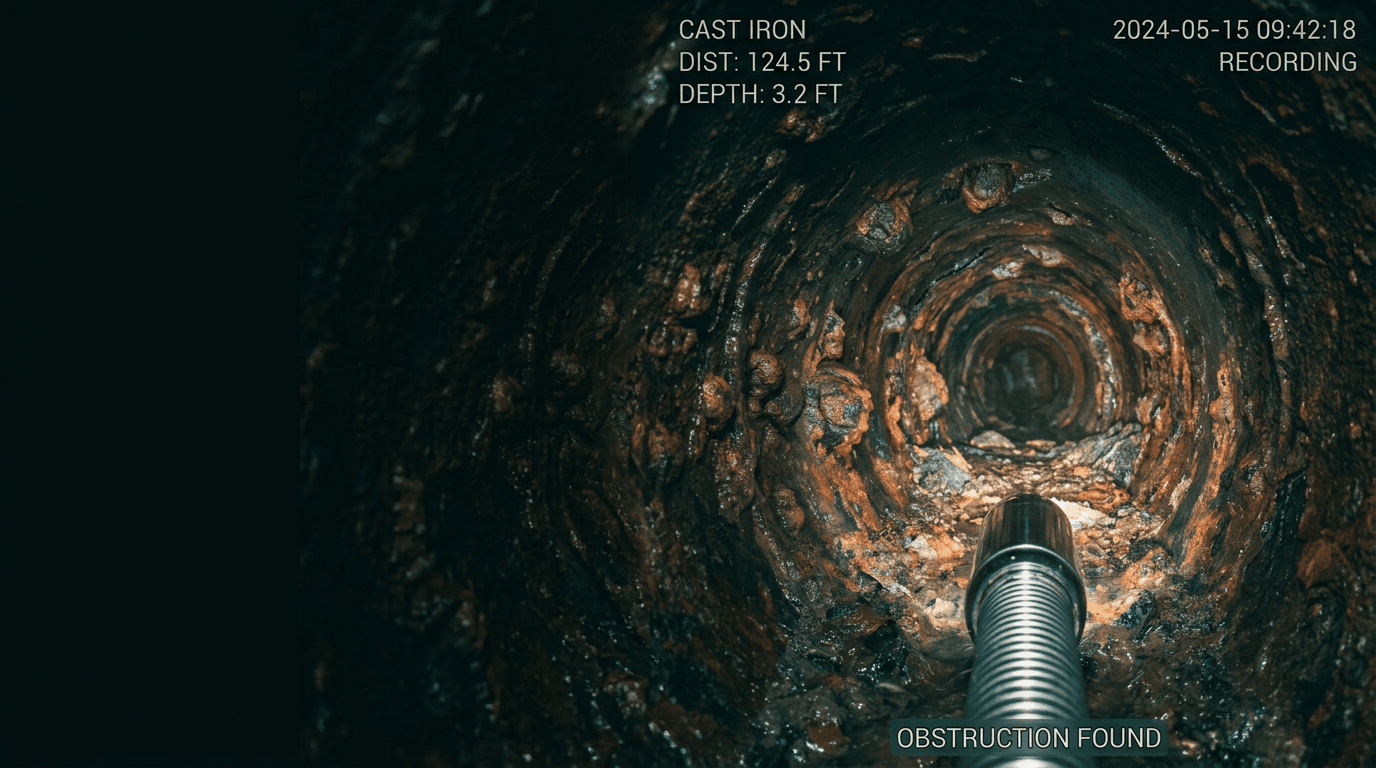
On-screen footage measurements can help estimate where a defect is located relative to the access point.
Equipment capability depends on the pipe diameter, length, access, condition, water level, bends, and project scope. The crew selects the camera system that fits the accessible line being inspected.
Our Process
How Jetters N' Drains Performs a Video Pipe Inspection
Understand the Problem
We begin with the symptoms, service history, affected fixtures, known cleanouts, previous repairs, and the timing of the backup or drainage problem. This helps determine whether the issue is likely localized or part of a larger drain or sewer system.
Identify the Correct Access Point
We locate a suitable cleanout, drain opening, manhole, removed fixture connection, roof access, or other approved entry point. The access point affects how much of the pipe can be inspected and how accurately the findings can be located.
Establish Flow or Clear the Blockage
A camera cannot pass through every stoppage. If the line is fully blocked, we may need to use cabling, hydro jetting, root cutting, pumping, or another cleaning method before the full inspection can continue.
Cleaning may include hydro jetting, mechanical cleaning, or robotic cutting.
Inspect the Pipe Interior
The camera is advanced through the accessible line at a controlled speed. The technician watches the pipe wall, bottom channel, joints, fittings, branches, water level, deposits, and visible defects. Moving too quickly can miss important conditions. The camera must pause at defects and transitions long enough to document them.
Track Distance and Pipe Direction
We monitor footage distance and pipe changes as the camera advances. Where locating equipment is available and conditions allow, we can identify the surface position of the camera and estimate the location of a defect.
Document Significant Findings
Roots, cracks, offsets, corrosion, holes, standing water, previous repairs, obstructions, and other significant findings are recorded or captured for review.
Reverse and Confirm
The camera is withdrawn slowly so the pipe can be viewed again from the opposite direction. A defect may appear differently when approached and viewed from each side.
Explain the Findings
Jetters N' Drains explains what is visible, what remains uncertain, and how the findings affect the next recommendation.
Recommend the Next Step
The next step may be cleaning, descaling, root removal, maintenance, trenchless lining, spray lining, sectional repair, excavation, replacement, or no immediate repair. The recommendation must fit the actual pipe condition.
Repair options may include trenchless pipe lining or spray-in-place pipe lining.
Pipe Locating
Finding the Defect from the Surface
Seeing the problem inside the pipe is only part of the job. The crew may also need to determine where that problem is located below the property.
A compatible camera head can transmit a signal that is detected from the surface with locating equipment.
This can help identify:
- the route of the sewer line
- the position of a blockage
- the location of a crack or offset
- the depth of the pipe
- the location of a connection
- the point where excavation may be required
- the beginning or end of a damaged section
- the position of a liner termination
- the location of a buried cleanout
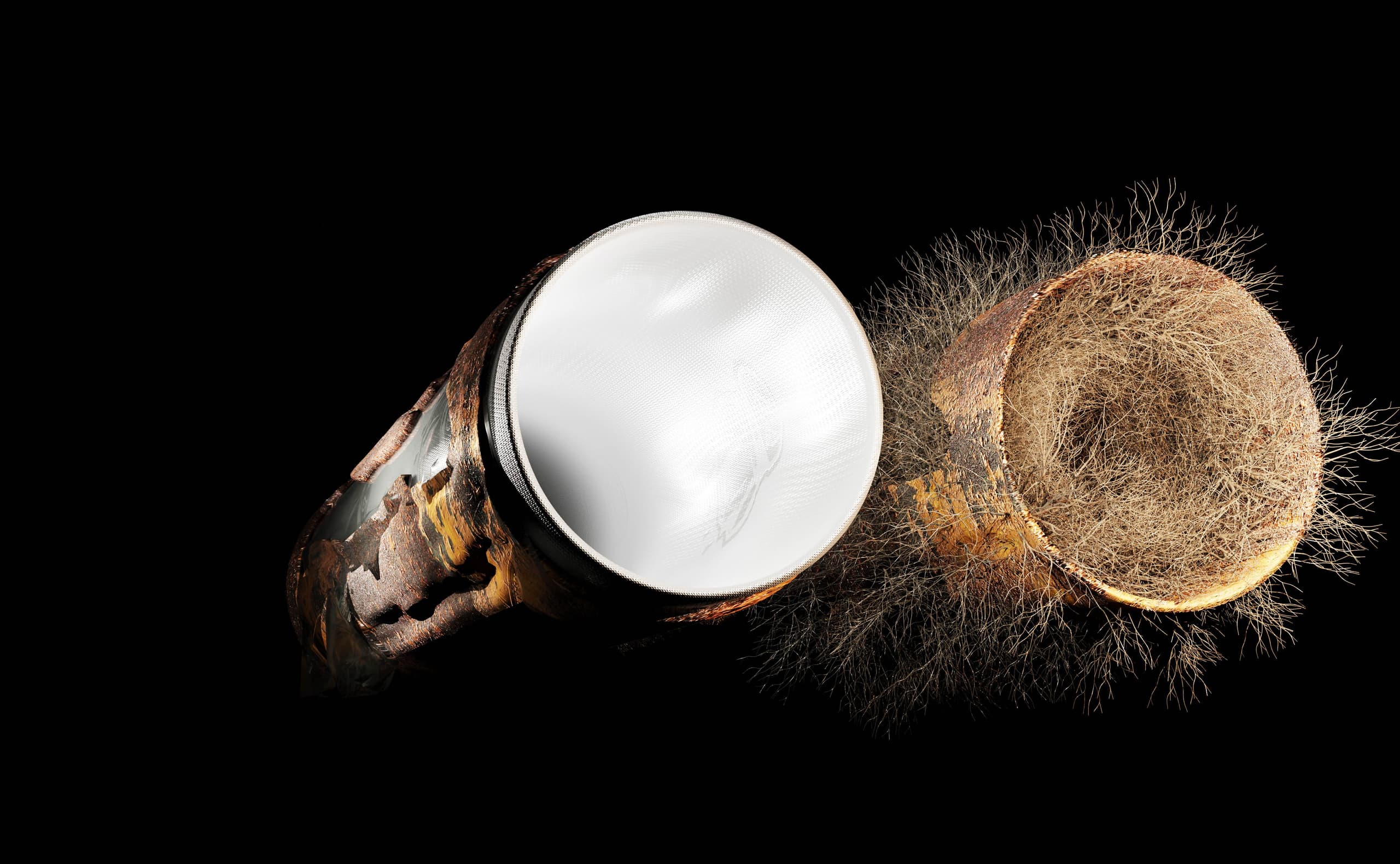
Surface locating provides an estimated position and depth. Soil conditions, utilities, building materials, signal interference, pipe depth, and equipment limitations can affect accuracy.
Inspection Timing
Why One Inspection Is Sometimes Not Enough
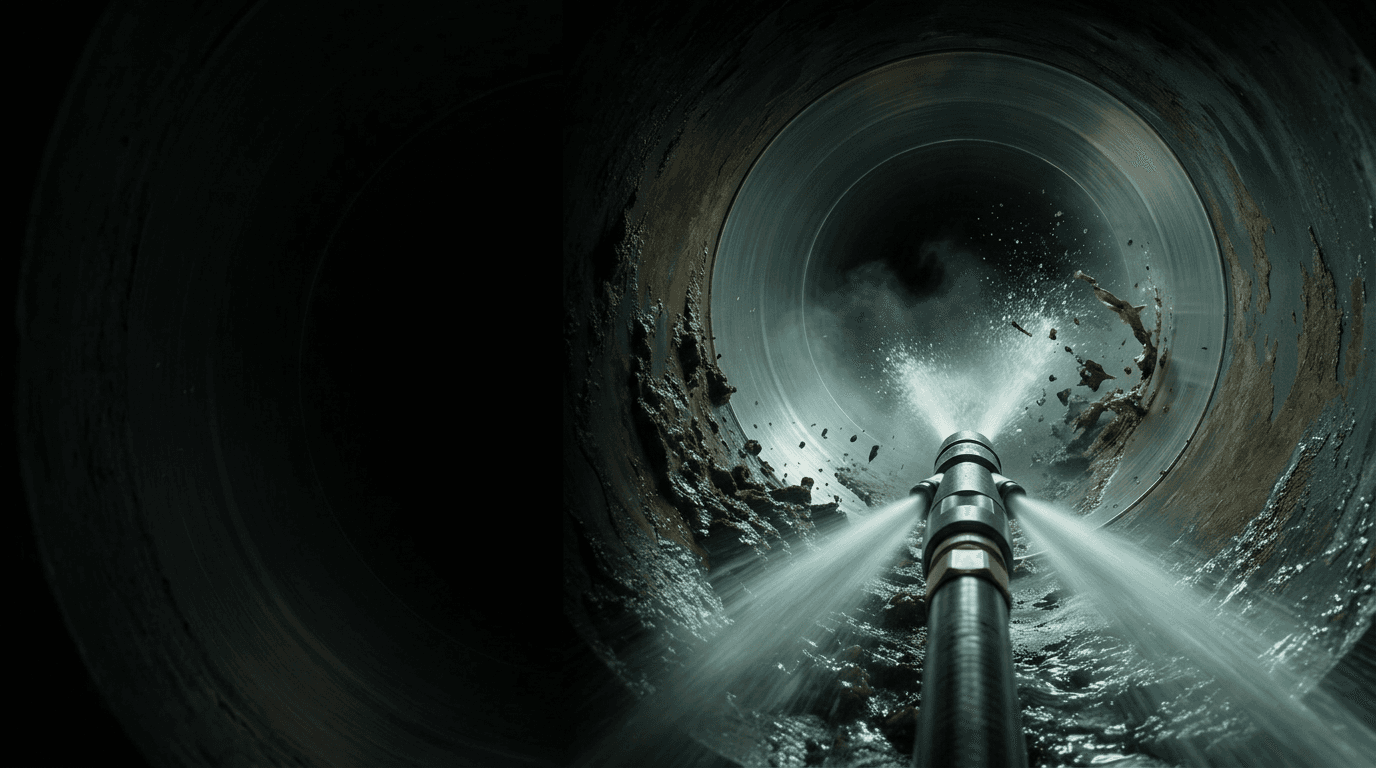
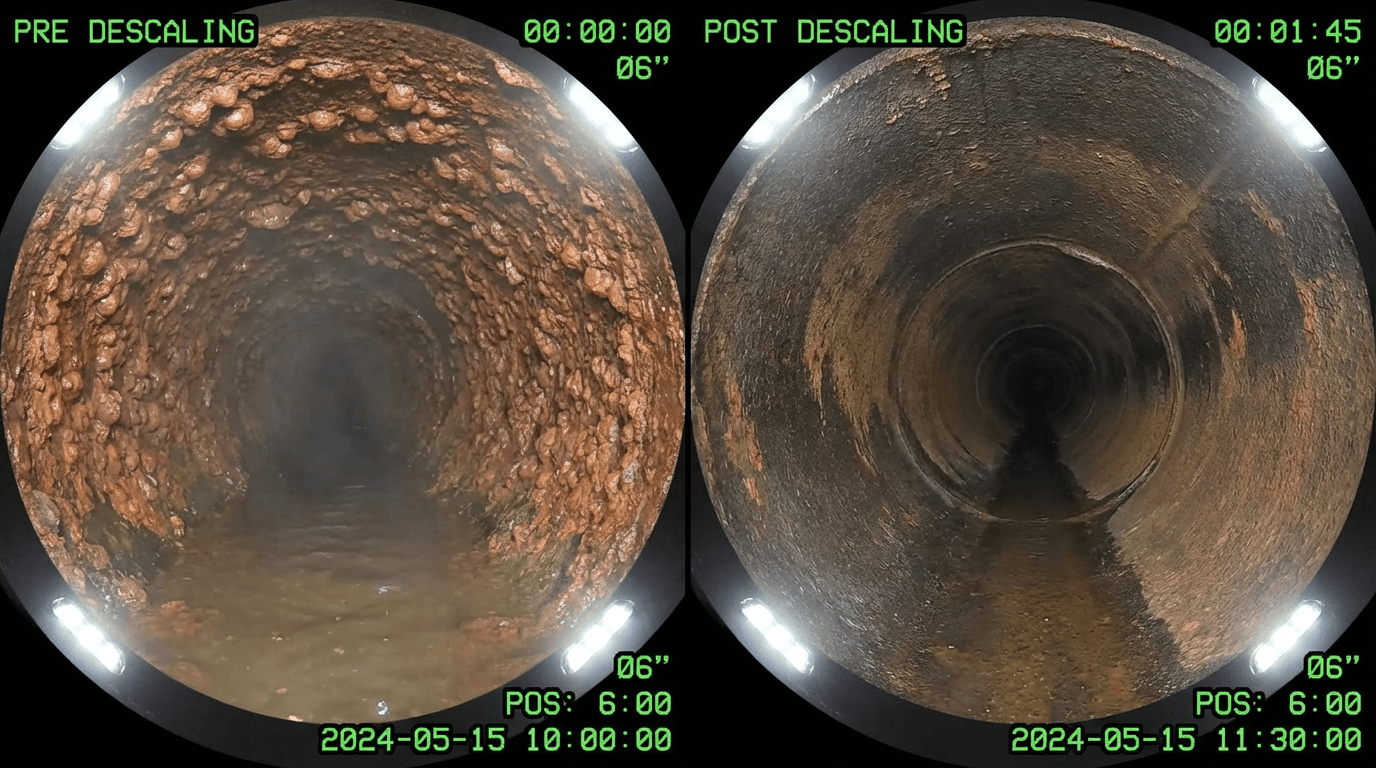
A pipe filled with grease, roots, sludge, scale, or wastewater may not be fully visible during the first camera pass. The initial inspection may confirm the blockage and guide the cleaning plan. The line is then cleaned using the appropriate method. A second inspection after cleaning shows the exposed pipe wall. This is often when the true condition becomes clear.
Before Cleaning
- identifies the blockage
- shows where access stops
- helps select cleaning equipment
- may reveal roots, grease, scale, or foreign objects
- may not show the full pipe wall
After Cleaning
- confirms whether the material was removed
- exposes cracks and joints
- shows corrosion and wall loss
- reveals offsets and deformation
- helps determine whether repair is required
- documents the available pathway through the cleaned line
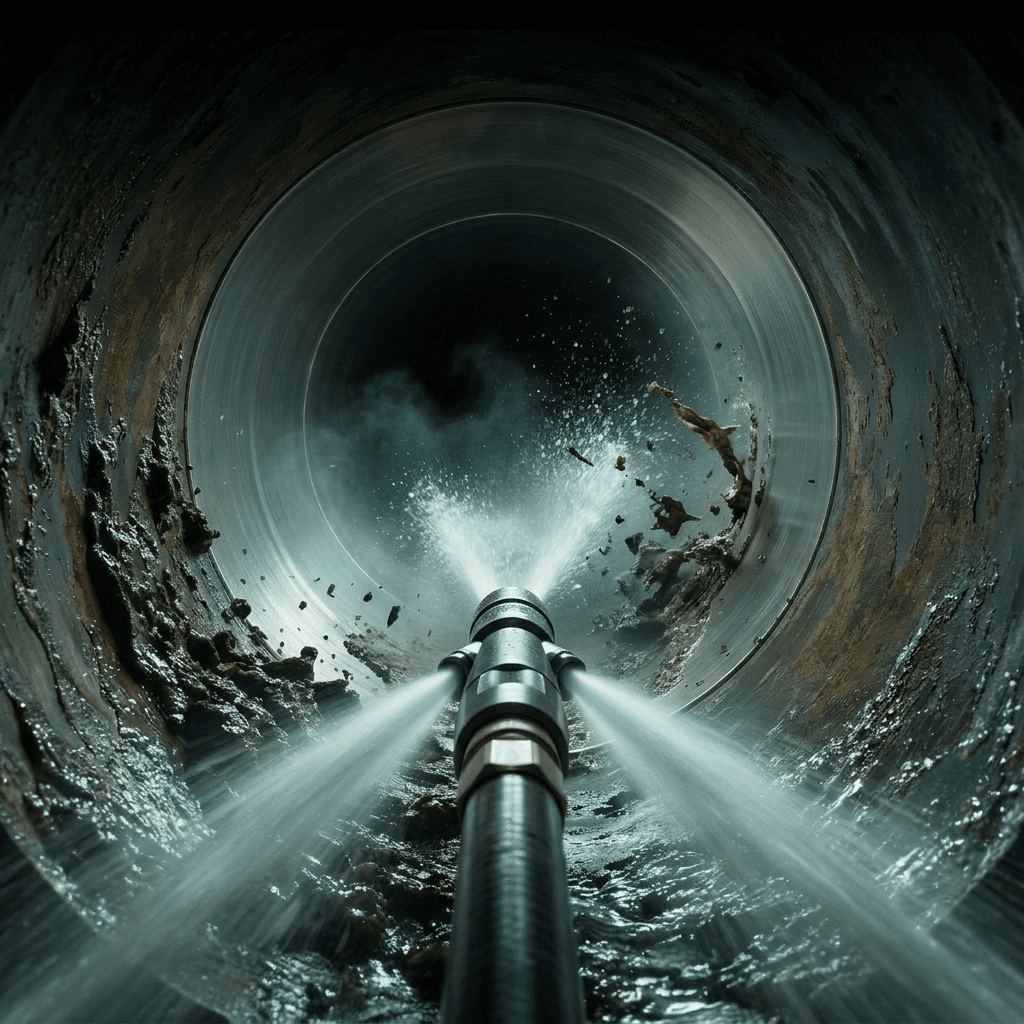
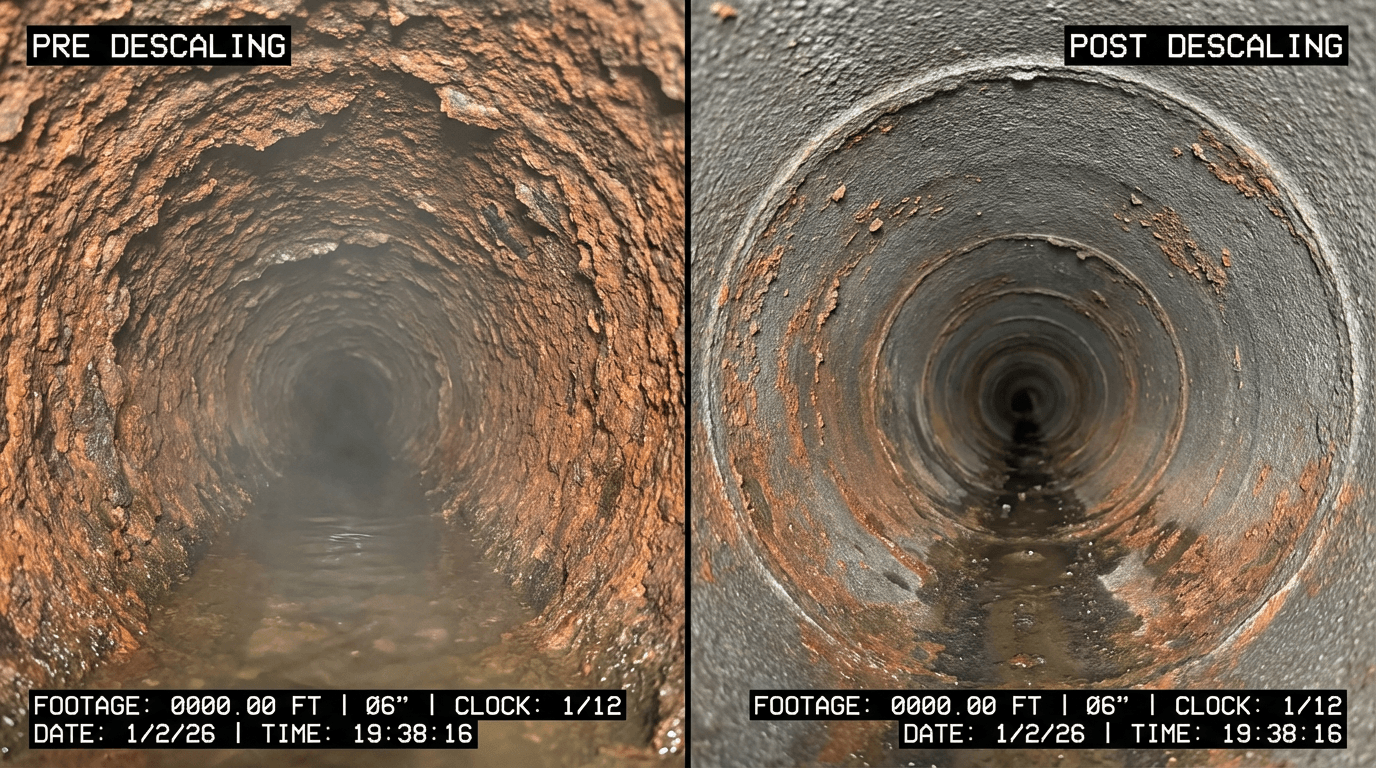
Cleaning can expose damage that was already present below the buildup. The cleaning process does not create every defect seen afterward. See our hydro jetting and drain cleaning service.
Residential
Residential Sewer Camera Inspections
Residential sewer problems often appear at the fixtures, but the cause may be below the slab, below the yard, under the driveway, or near the public connection.
Jetters N' Drains uses video inspection to evaluate qualifying residential piping including:
- main sewer laterals
- under-slab building drains
- cast iron waste lines
- clay sewer pipe
- PVC sewer laterals
- kitchen and laundry branches
- floor drains
- vertical waste lines
- cleanout-to-street sewer sections
- pipes below patios and driveways
- pipes below landscaping
- previous trenchless repairs
Residential inspections may be useful for
- recurring backups
- root intrusion
- older cast iron
- repeated drain cleaning
- suspected pipe collapse
- sewer odors
- renovation planning
- trenchless lining evaluation
- post-repair verification
- property purchase due diligence
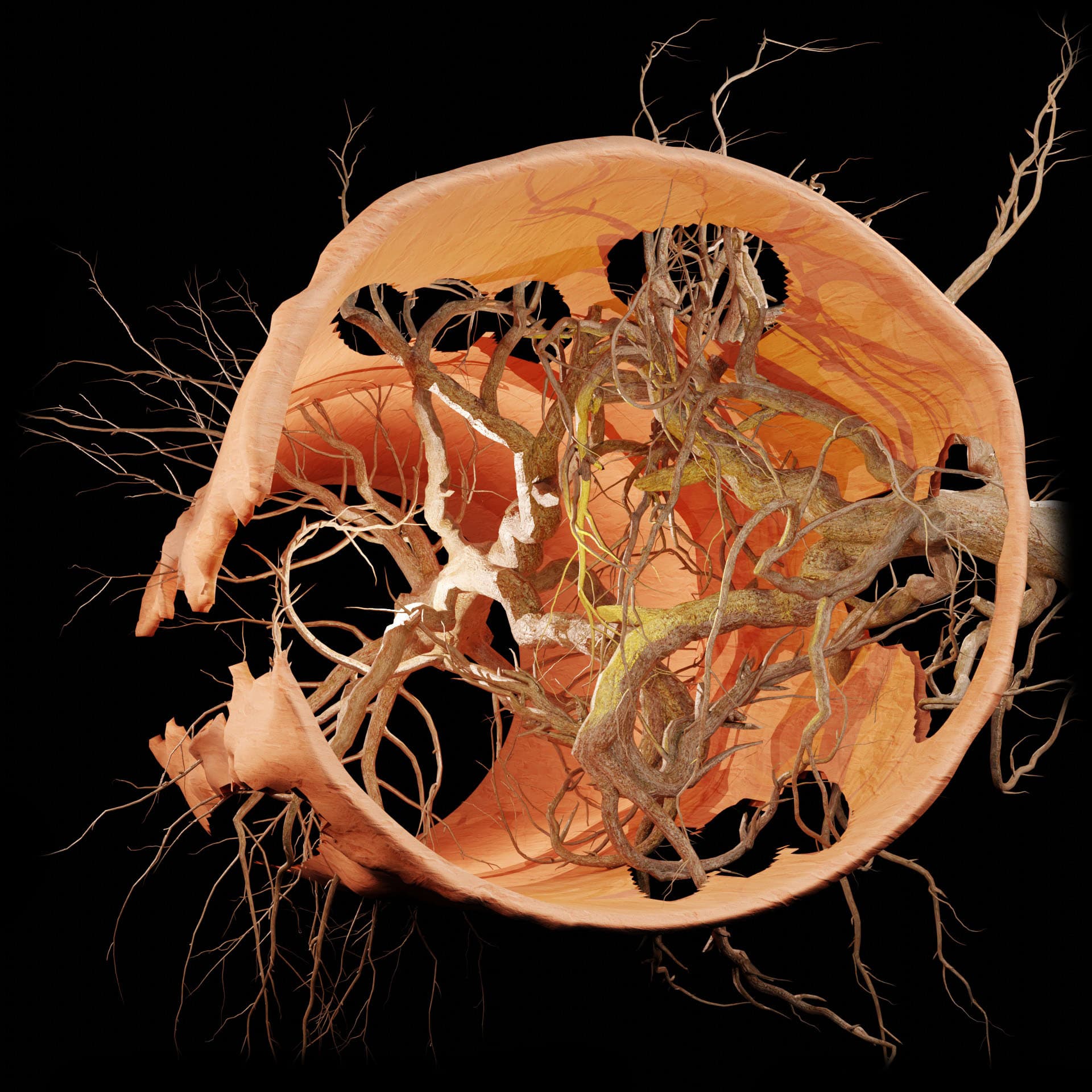
A sewer camera inspection covers the accessible drain or sewer line on camera. It does not replace a full plumbing inspection, structural engineering report, code inspection, or a prediction of future pipe performance.
Commercial
Commercial Sewer and Drain Video Inspection
Commercial properties often have longer pipe runs, shared systems, multiple branches, higher wastewater volume, restricted access, and more complicated operating requirements.
Qualifying Systems
Jetters N' Drains can evaluate qualifying systems in:
- restaurants
- apartment and condominium properties
- hotels
- retail centers
- office buildings
- schools
- healthcare properties
- industrial facilities
- warehouses
- commercial kitchens
- mixed-use buildings
- institutional properties
- property management portfolios
Commercial Inspection May Support
- recurring blockage investigation
- grease line maintenance
- capital repair planning
- tenant complaint investigation
- pre-cleaning documentation
- post-cleaning verification
- trenchless rehabilitation design
- repair verification
- construction closeout
- maintenance planning
- location of buried defects
- identification of shared system problems
Commercial work may require phased access, after-hours inspection, tenant coordination, wastewater restrictions, manhole access, traffic control, and detailed reporting. The inspection plan must account for both the pipe system and property operations.
Due Diligence
Know the Pipe Condition Before Making a Larger Decision
A sewer lateral is often buried, inaccessible, and expensive to replace. Its condition may not be obvious during a normal property walkthrough.
A video inspection can provide additional information before:
- purchasing a property
- approving a major sewer repair
- replacing finished flooring
- remodeling a kitchen or bathroom
- adding fixtures
- installing trenchless lining
- excavating a yard or driveway
- accepting completed plumbing work
- taking responsibility for a commercial property
- creating a maintenance budget
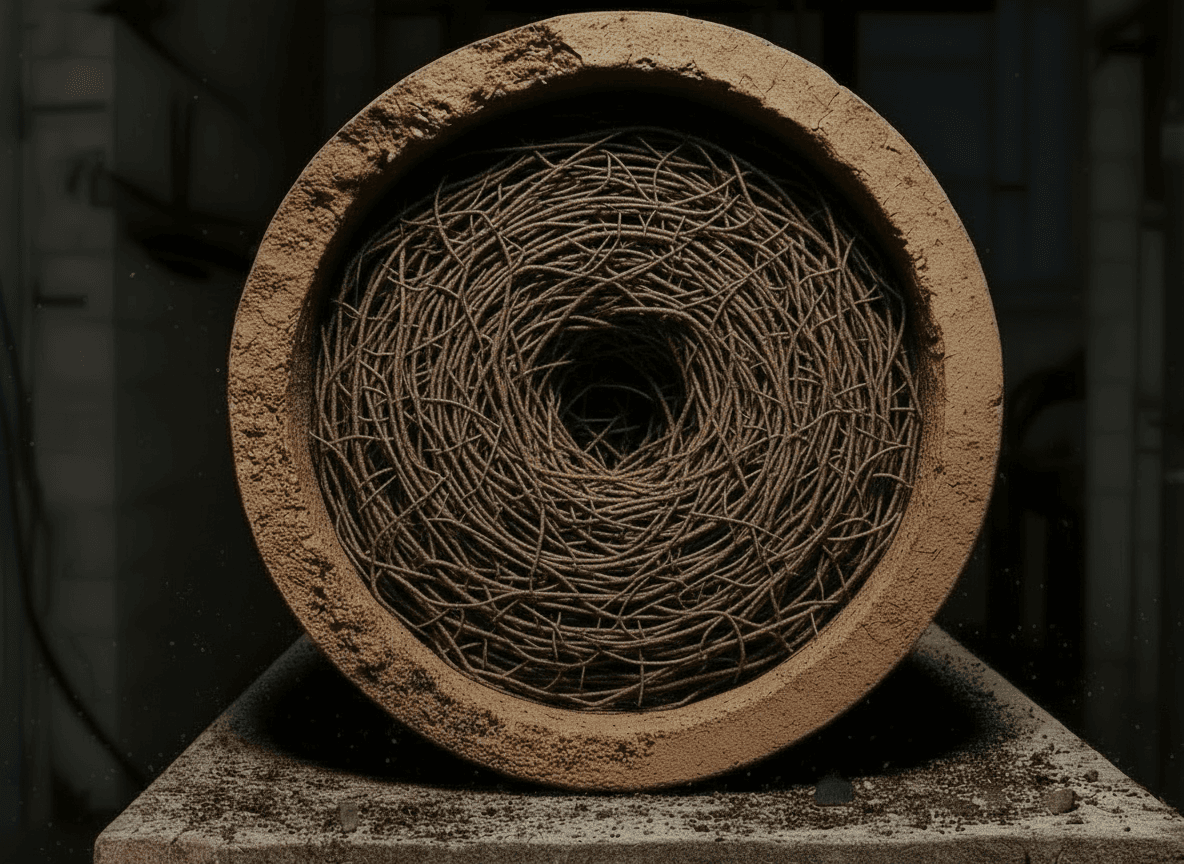
The inspection documents visible conditions on the inspection date. It does not guarantee future performance, confirm legal ownership of the line, establish code compliance, or replace specialized engineering, municipal, or real estate due diligence.
Trenchless Support
Video Inspection Is the Starting Point for Trenchless Pipe Repair
Trenchless lining should always start with camera inspection.
Before a pipe is lined, the contractor must understand:
- pipe diameter
- pipe material
- repair length
- access
- bends
- branches
- offsets
- wall loss
- standing water
- deformation
- root intrusion
- previous repairs
- transition points
- connection locations
Jetters N' Drains uses camera inspection before cleaning, after cleaning, and after installation when appropriate.
Pre-cleaning inspection helps identify the problem. Post-cleaning inspection confirms candidacy. Post-installation inspection verifies the visible finished work. Related services include trenchless pipelining and spray-in-place pipe lining.
A pipe that cannot be fully inspected may not be ready for lining.
Verification
Verify the Work After Cleaning or Repair
A drain line should not be considered complete simply because water moves through it.
Jetters N' Drains can use video inspection to verify visible conditions after:
- hydro jetting
- root removal
- cast iron descaling
- mechanical cleaning
- trenchless pipe lining
- spray lining
- sectional repair
- robotic branch reinstatement
- excavation and replacement
- connection repair
A final inspection may confirm
- the blockage was removed
- the line is open
- branch connections are visible
- a liner is continuous
- terminations are visible
- debris has been cleared
- roots are no longer present in the inspected section
- the repair aligns with the existing pipe
- additional defects remain outside the repaired area
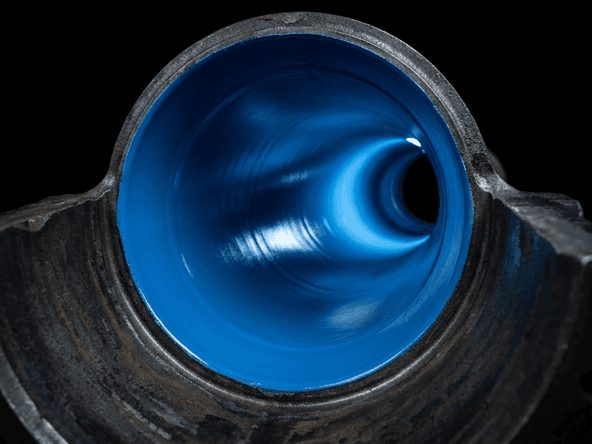
A visual inspection confirms what the camera can see. It does not replace pressure testing, leak testing, material testing, engineering review, or other project-specific acceptance requirements.
Limitations
What a Sewer Camera Inspection Cannot Do
Video inspection is useful, but camera access, water level, and pipe condition set the limits of what we can see.
The Camera May Not Provide a Complete Inspection When
- the line is fully blocked
- water covers the camera lens
- heavy buildup hides the pipe wall
- the pipe is too small
- the pipe is severely deformed
- there are too many tight bends
- the cable cannot pass an offset
- access is unavailable
- the line is too long for the equipment
- the pipe contains active flow that cannot be controlled
- a collapse prevents further travel
- the camera cannot enter a branch connection
- the defect is outside the visible pipe interior
A Standard Inspection Does Not Automatically Determine
- exact pipe wall thickness
- soil condition around the pipe
- structural load capacity
- material strength
- leak rate
- code compliance
- pipe ownership
- legal responsibility
- exact remaining service life
- defects hidden behind opaque deposits
- conditions outside the inspected route
Jetters N' Drains explains what the camera confirmed, what remains uncertain, and whether further cleaning, testing, locating, excavation, or specialized evaluation is needed.
Why Jetters N' Drains
Why Choose Jetters N' Drains for Video Pipe Inspections?
The camera is only one part of the inspection.
The value comes from understanding what the image means, how the defect affects flow, what cleaning can reveal, and which repair methods fit the condition.
We Inspect the Correct Line
We determine whether the problem is in a fixture branch, building drain, sewer lateral, main line, or another connected section.
We Understand Cleaning and Repair
We do not review the camera in isolation. We understand how roots, grease, scale, corrosion, lining, excavation, and previous repairs affect the pipe.
We Locate Important Defects
Where equipment and conditions allow, we can identify the surface position and estimated depth of a defect.
We Document the Findings
Video and still images can support repair planning and customer review when documentation is part of the agreed scope.
We Explain What Is Visible
We show the customer the significant findings and explain what they mean in practical terms.
We Do Not Overstate the Camera
We distinguish between what the inspection confirms and what requires further testing.
We Can Perform the Next Step
If the pipe needs cleaning, descaling, root removal, lining, repair, or replacement, Jetters N' Drains can build the next phase around the inspection findings.
We Verify Completed Work
Camera inspection can document the visible result after cleaning or rehabilitation.
Orange County
Sewer Camera Inspections for Orange County Properties
Orange County properties contain a wide mix of sewer and drain systems.
Older homes may have cast iron, clay, or aging sewer laterals. Restaurants and commercial kitchens develop grease buildup. Multifamily properties have long shared drain runs. Hotels, offices, retail centers, and institutional buildings may have buried piping that is difficult to evaluate from the surface.
Jetters N' Drains serves qualifying properties throughout Orange County, including Anaheim, Fullerton, Orange, Garden Grove, Santa Ana, Placentia, Buena Park, Irvine, Tustin, Huntington Beach, Costa Mesa, Newport Beach, Fountain Valley, Westminster, and Mission Viejo.
We inspect the pipe before recommending a major repair whenever access and conditions allow. Related services include hydro jetting, drain cleaning, and project scheduling.
Sewer Camera Inspection Questions
What is a sewer camera inspection?
Can a camera find the exact location of a sewer problem?
Can the camera inspect a completely clogged sewer?
Can a sewer camera see through water?
Can a camera find roots?
Can a camera confirm a sewer belly?
Can a camera find cracks in cast iron?
Should the sewer be cleaned before inspection?
Do I receive a recording?
Can a sewer camera find every pipe problem?
Can you inspect a sewer before buying a home?
Can video inspection confirm whether a pipe can be lined?
Can you inspect commercial sewer lines?
How long does a sewer camera inspection take?
Resources
Related Guides
Signs You Need a Sewer Camera Inspection Before Repair
Symptoms that warrant video pipe inspection before jetting, lining, or excavation in Orange County.
Read guideWhen Cast Iron Sewer Lines Fail in Older Orange County Homes
How cast iron corrodes, what symptoms look like, and how inspection and trenchless repair fit older OC neighborhoods.
Read guideRoots in Sewer Lines: What Jetting Can and Cannot Fix
How root intrusion forms, when hydro jetting clears it, and when the pipe needs structural repair.
Read guide
Next Step
Find the Sewer Problem on Camera
A recurring backup, slow drain, or damaged sewer line should not be diagnosed from the surface alone. Jetters N' Drains can inspect the accessible pipe, identify visible defects, locate significant problem areas, and explain whether the next step is cleaning, maintenance, trenchless lining, repair, or replacement.
Serving Orange County and surrounding Southern California communities within our established service area.