Clear the Blockage and Clean the Pipe
Hydro Jetting and Drain Cleaning in Orange County, California
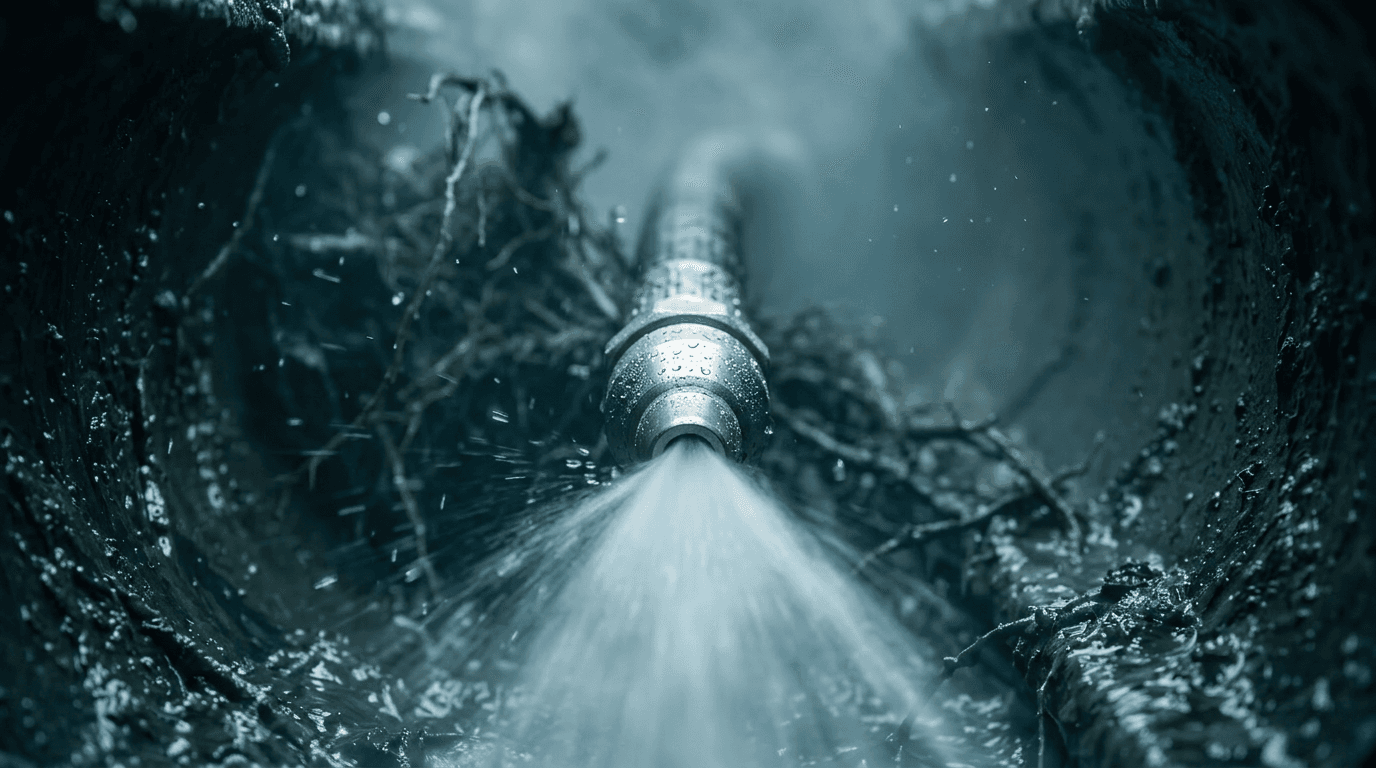
A clogged drain is not always caused by one object sitting in the pipe. Grease can coat the walls. Roots can grow through a joint. Cast iron can fill with rust and scale. Sludge, sand, soap, food waste, and years of buildup can reduce the opening until the line no longer drains correctly.
Jetters N' Drains uses professional drain-cleaning equipment, sewer cameras, mechanical tools, and hydro jetting to remove the material causing the restriction. We do not simply punch a small opening through the blockage and leave the rest behind. We evaluate the pipe, choose the correct cleaning method, restore flow, and verify the result.
The correct cleaning method depends on the pipe material, condition, diameter, access, and type of blockage. We inspect before applying aggressive cleaning methods.
The Problem
Why Drains Keep Slowing Down or Backing Up
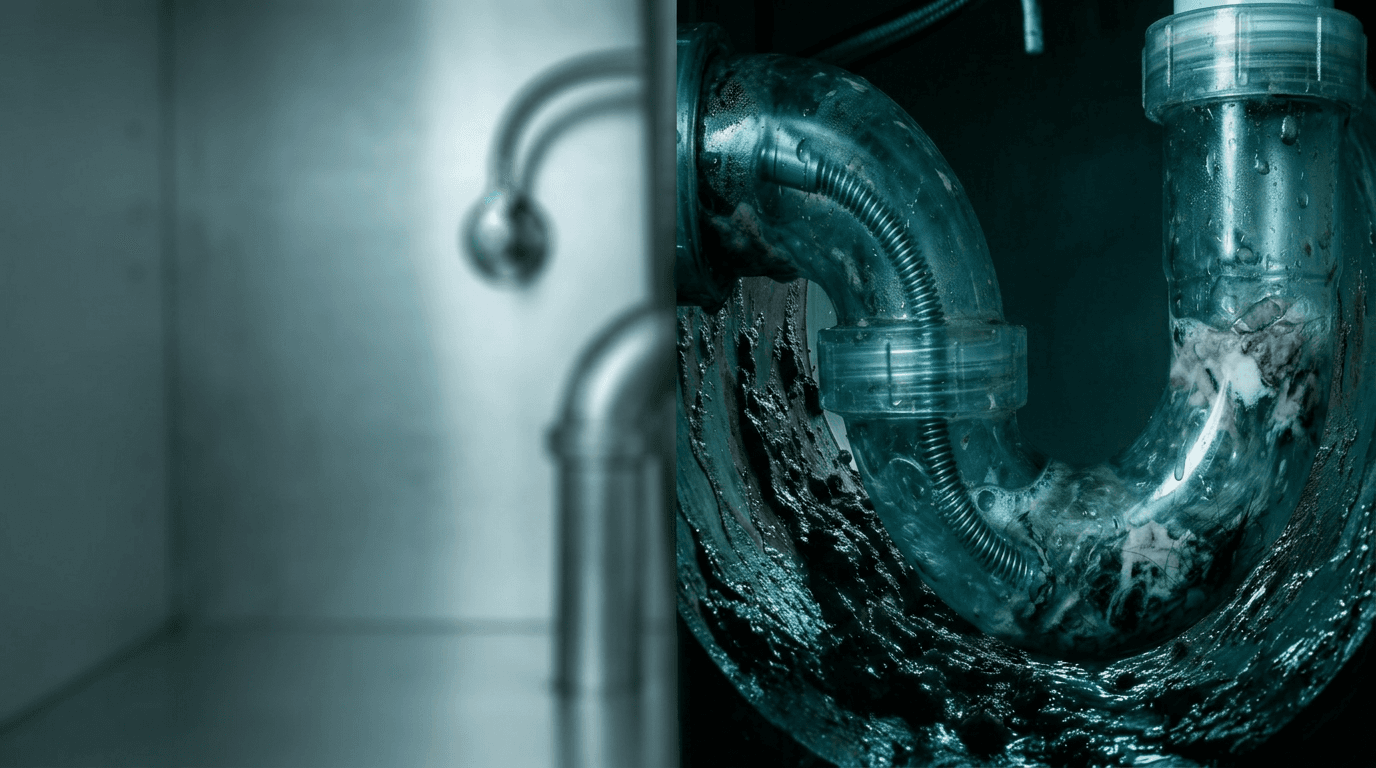
A drain can appear clear while buildup remains along most of the pipe wall.
A cable may cut a path through grease or roots, allowing water to move again. That can solve an immediate stoppage, but it may not remove the material surrounding the opening. The remaining buildup catches more waste, and the line begins slowing again.
In other cases, the blockage is only part of the problem. The pipe may also contain corrosion, cracks, separated joints, a low section, or heavy internal scaling.
Jetters N' Drains looks at both questions:
- What is blocking the line right now?
- Why did the blockage develop in that location?
 Inside the line
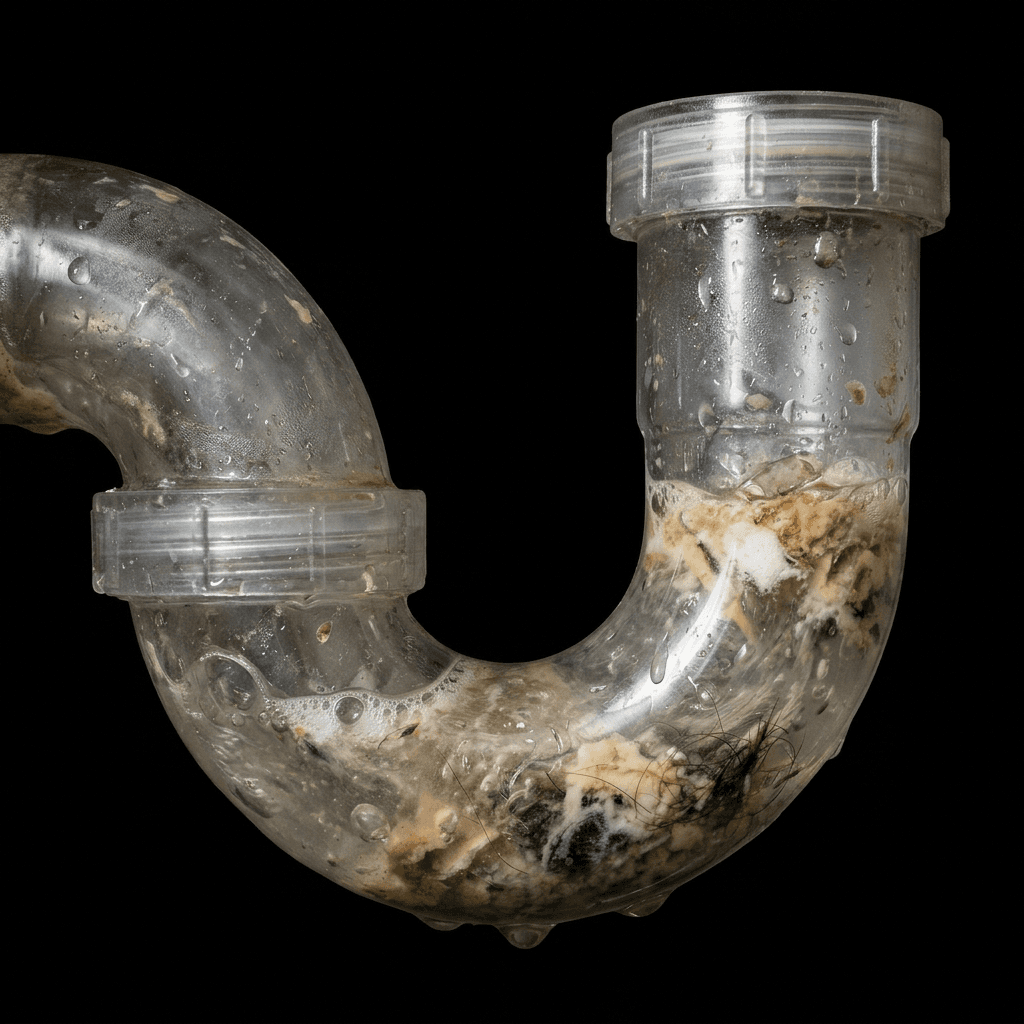
Grease Buildup
Fats, oils, food residue, soap, and organic material collect on the pipe wall. The opening becomes smaller until flow slows or stops.
Root Intrusion
Roots enter through cracks, joints, and damaged connections. They catch paper and waste, then continue growing.
Cast Iron Scale
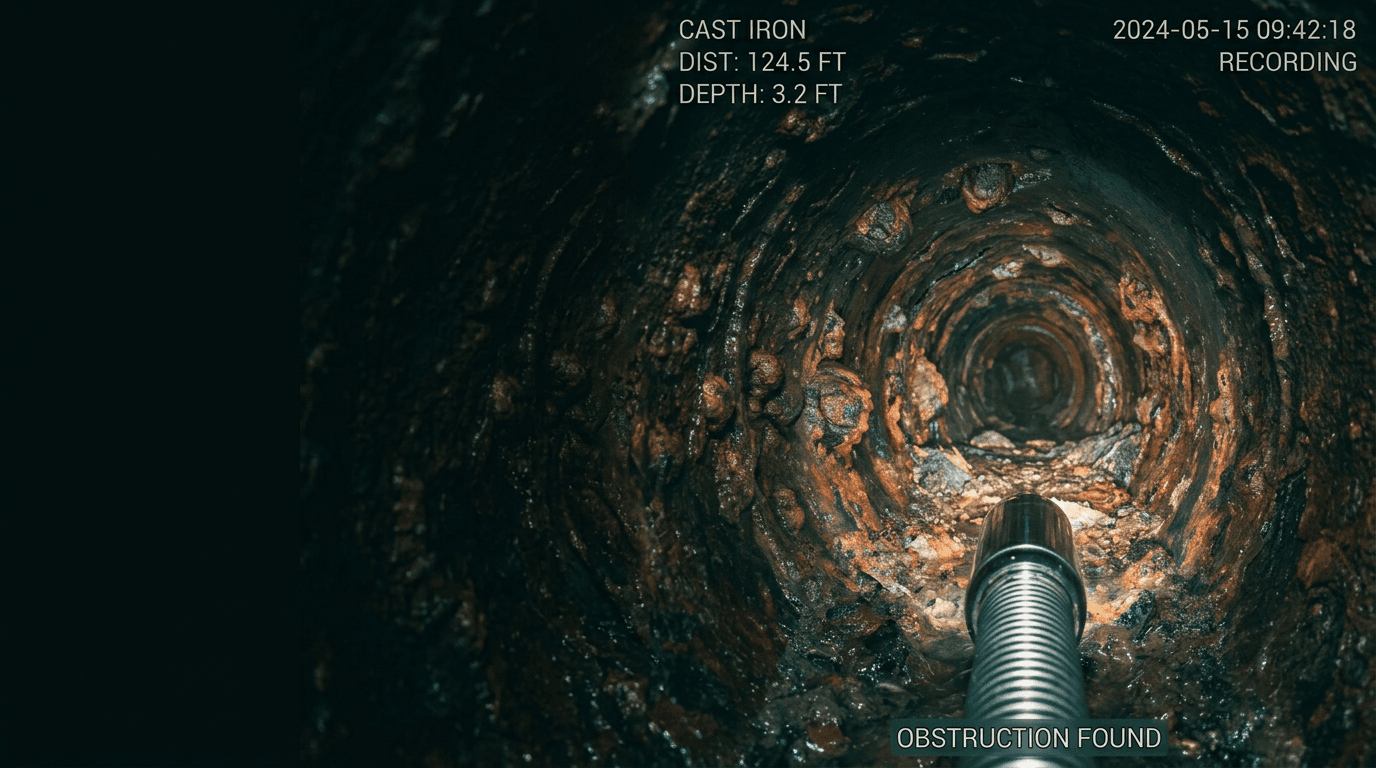
Older cast iron develops layers of rust, mineral scale, and loose corrosion. The pipe becomes rough and restricted.
Sludge and Organic Deposits
Wastewater solids can settle and form heavy deposits, especially in low-flow sections and poorly maintained lines.
Sand, Silt, and Sediment
Sediment can collect in damaged sewer lines and restrict flow. We assess the pipe before choosing a cleaning method.
Foreign Objects
Wipes, rags, hygiene products, packaging, and other materials can become lodged in the line.
Construction Debris
Grout, concrete residue, soil, tile materials, and jobsite debris can enter drains during construction or remodeling.
Failed Pipe Conditions
A crack, offset, collapse, improper slope, or deformed section may repeatedly catch debris even after cleaning.
Warning Signs
Signs Your Drain or Sewer Line Needs Professional Cleaning
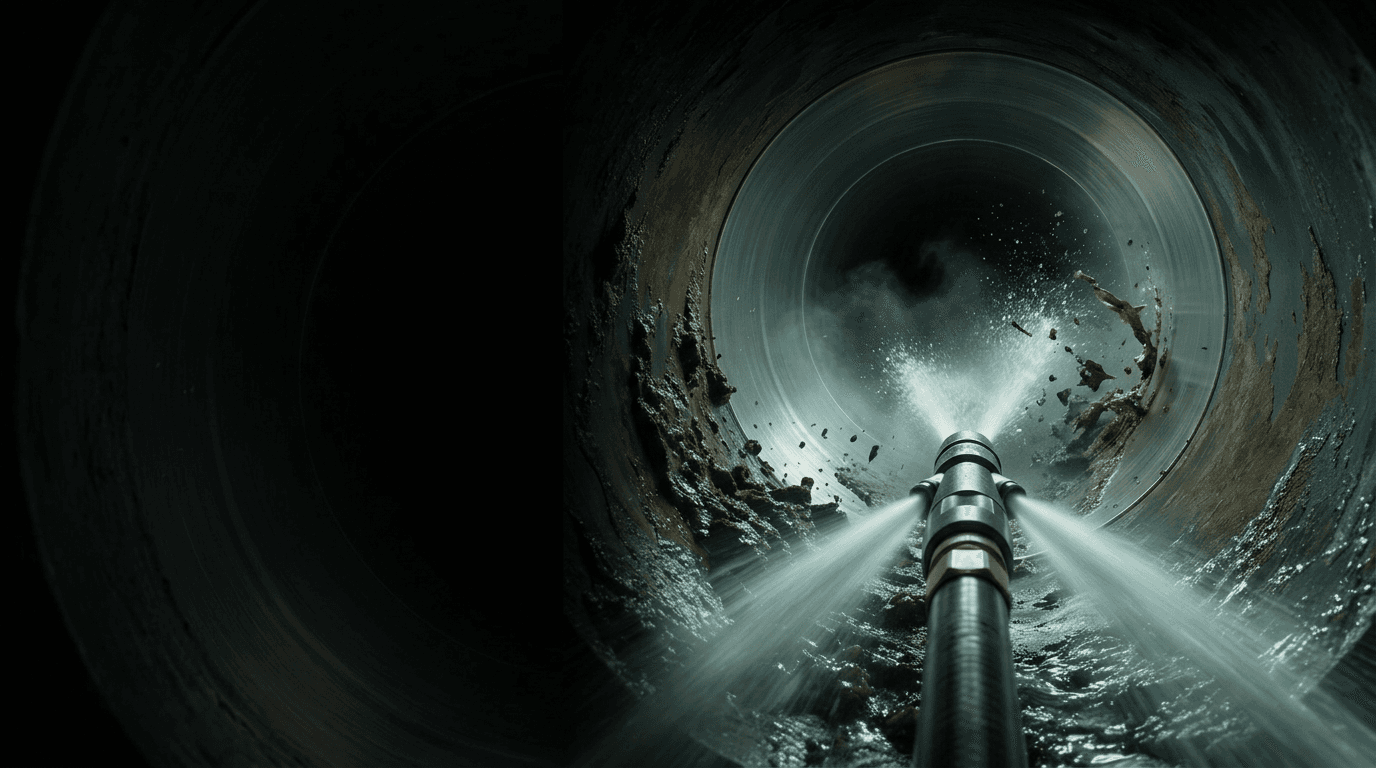
A single slow fixture may be a localized drain problem. Several fixtures reacting together often indicate a larger building drain or sewer issue.
- water drains slowly from several fixtures
- toilets bubble or gurgle
- a shower or tub fills when a toilet is flushed
- wastewater appears at a floor drain
- sewage exits through a cleanout
- the same drain clogs repeatedly
- previous cabling only helped temporarily
- foul drain odors continue after normal cleaning
- a restaurant drain develops recurring grease blockages
- roots have been found in the sewer line
- cast iron piping releases rust and scale
- the camera shows reduced pipe diameter
- commercial drains require increasingly frequent service
- multiple tenants report the same drainage issue
- the main sewer line backs up during heavy use
Recurring blockages usually mean material remains in the pipe or a defect is causing debris to collect. Clearing the immediate stoppage is not always the same as cleaning the line.
The Method
How Hydro Jetting Cleans a Pipe
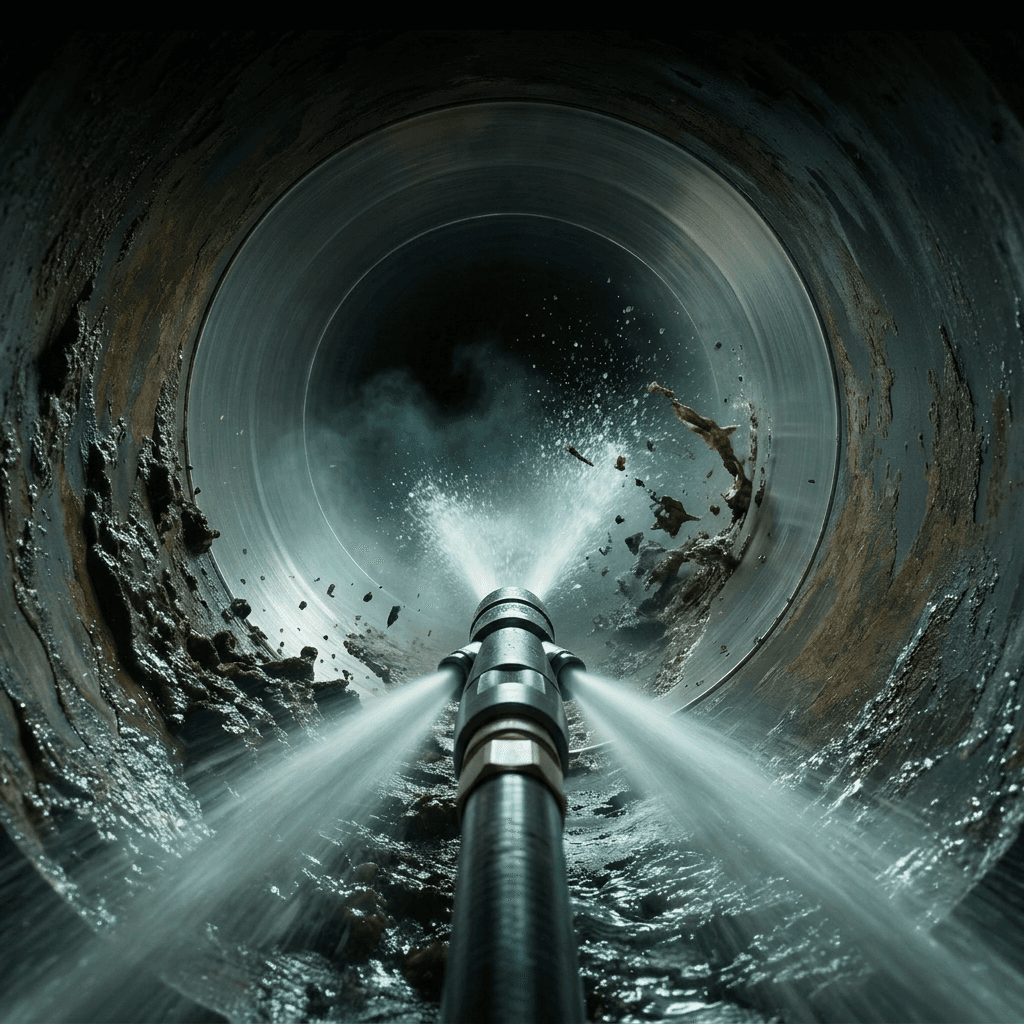
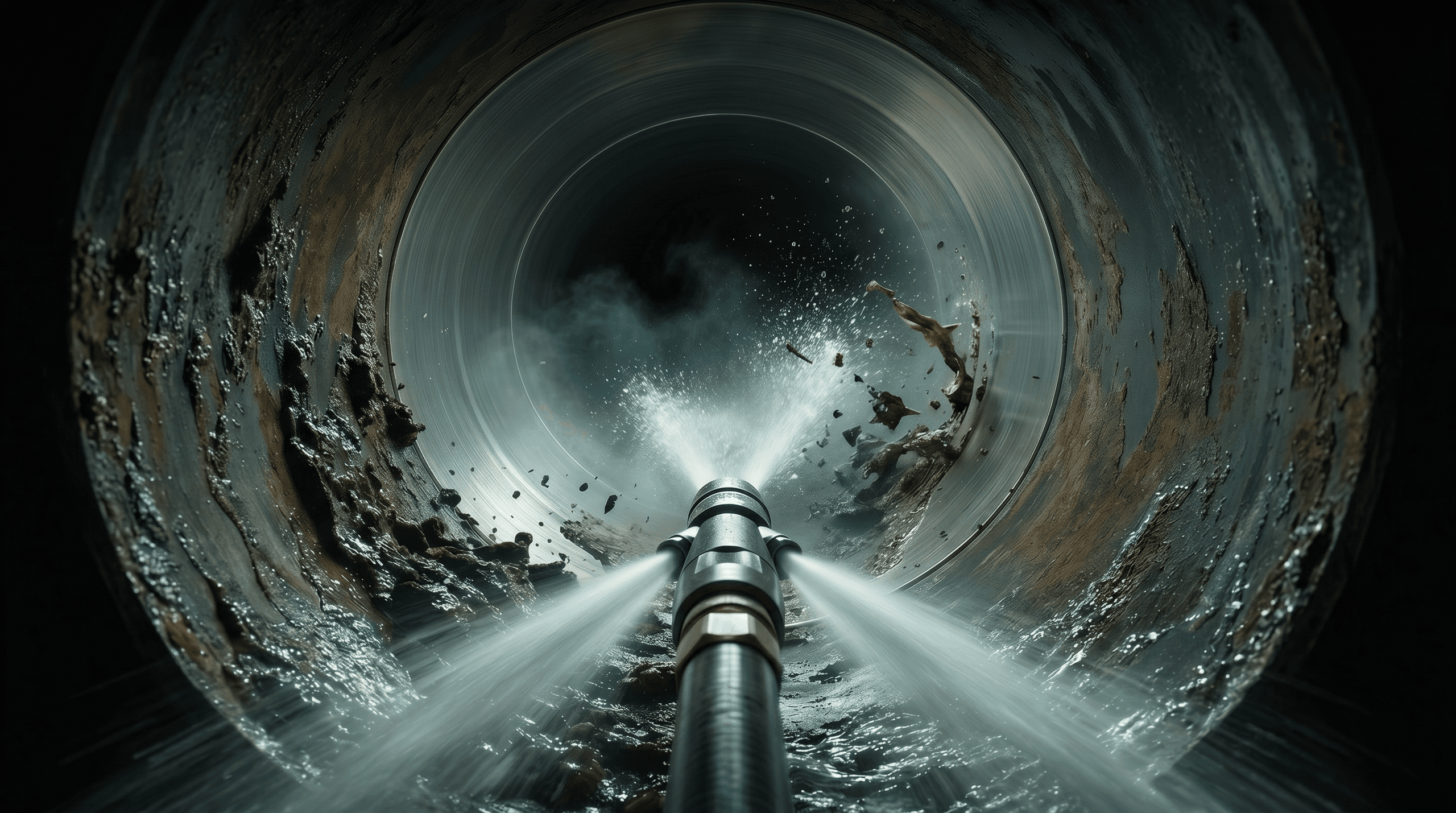
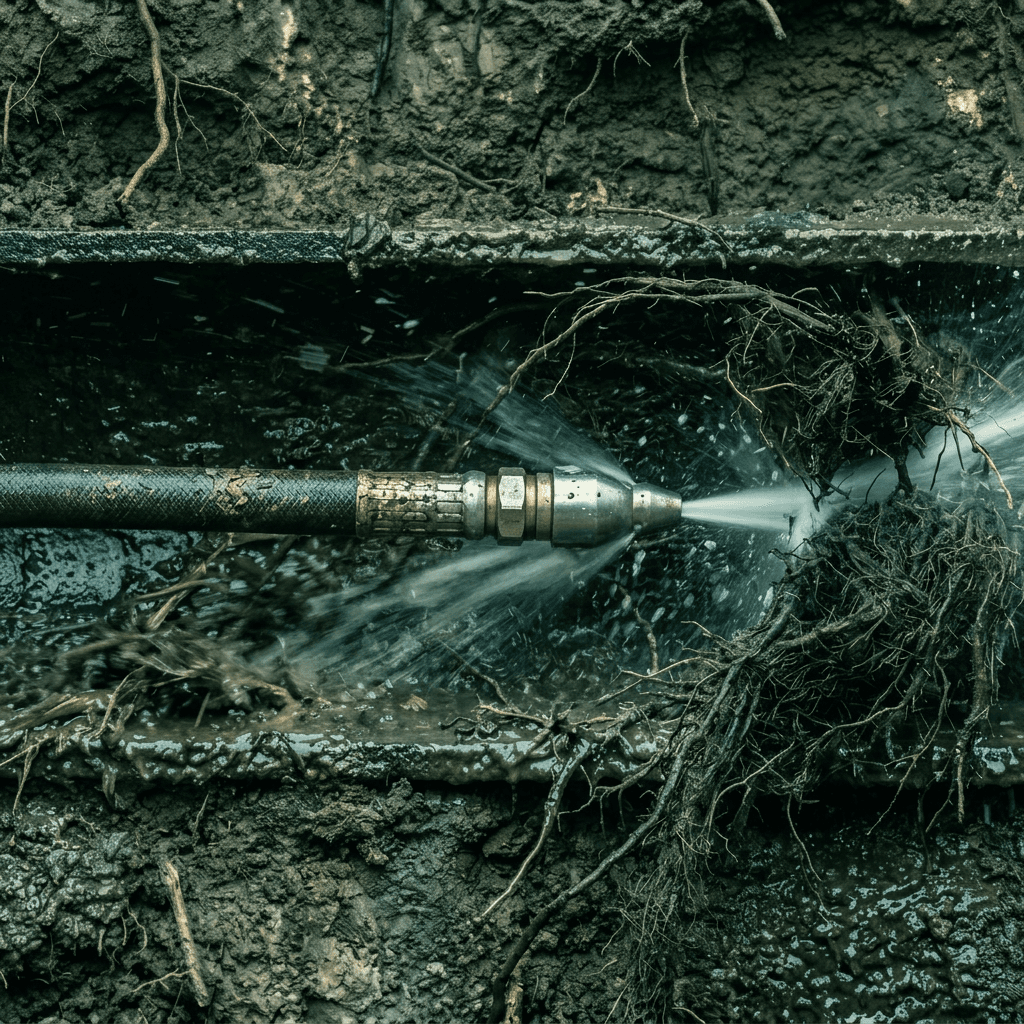
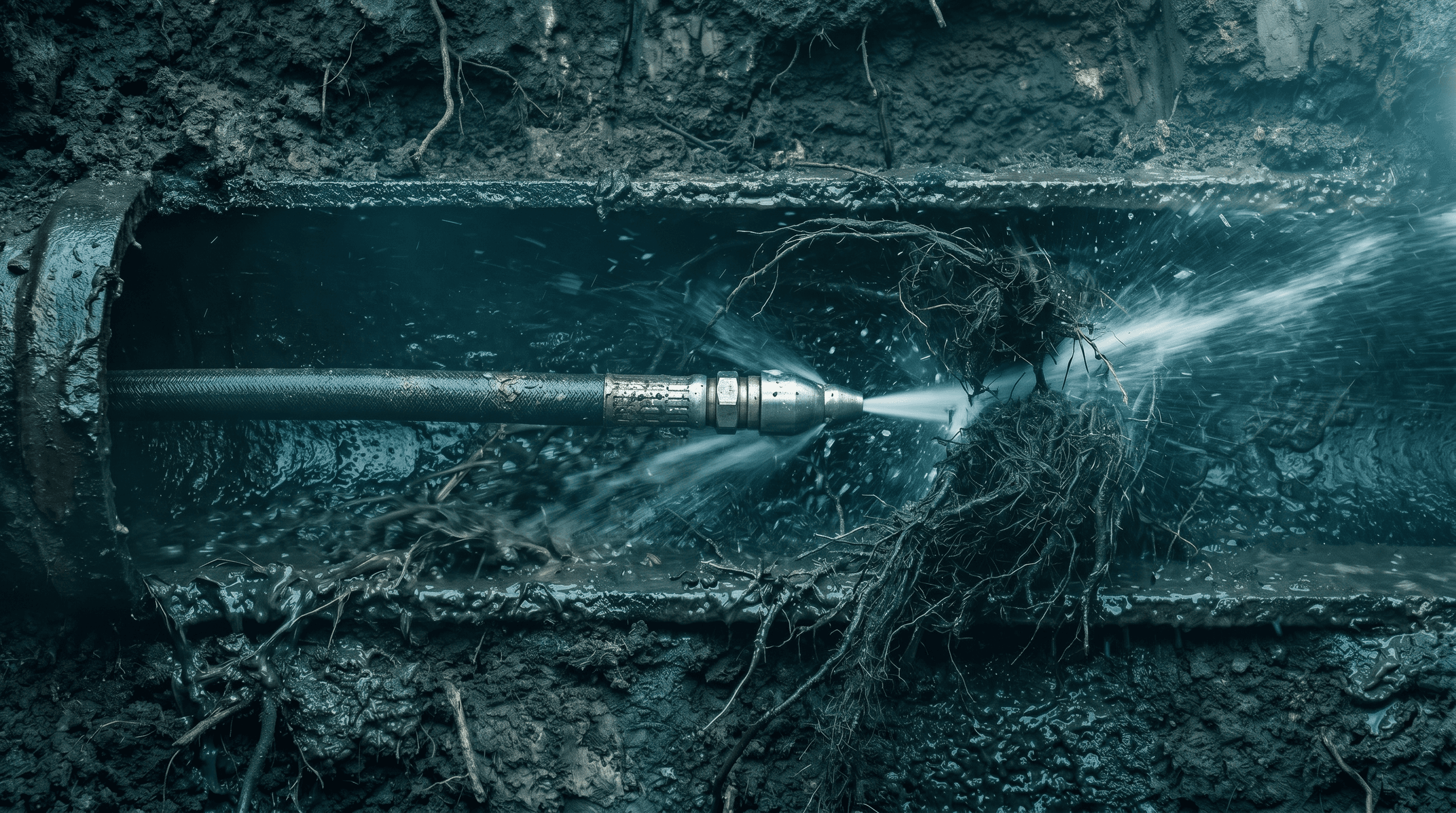
Hydro jetting uses a specialized hose and sewer nozzle to direct high-pressure water through the pipe.
Rear-facing water jets help propel the nozzle through the line and flush loosened material back toward the access point. Forward-facing or directional jets may be used to penetrate blockages, break deposits, cut roots, or clean specific areas.
The nozzle, pressure, water flow, hose size, insertion direction, and cleaning pattern must match the pipe and the material being removed.
Hydro jetting is not simply turning the pressure to the maximum setting. Effective cleaning depends on using the correct tool and controlled technique.
Technical note
Pressure breaks and strips material from the pipe wall. Water flow carries that material out of the system. Both matter.
Qualification
Hydro jetting cleans the pipe. It does not repair cracks, failed joints, collapsed sections, poor slope, or missing pipe wall.
Repair Options
Clearing a Blockage and Cleaning a Pipe Are Different Jobs
Drain cabling and hydro jetting are both useful. They perform different work.
A cable or sectional machine can break through a stoppage, retrieve an obstruction, cut roots, or open a small drain. It is often the correct first tool for a localized clog.
Hydro jetting is used when the objective is to clean a larger portion of the pipe wall and flush loosened material from the system. For localized fixture clogs, see our drain cleaning service.
| Consideration | Mechanical Cabling | Hydro Jetting |
|---|---|---|
| Primary Function | Breaks through, retrieves, or cuts material causing a blockage. | Uses pressurized water to remove buildup and flush material from the pipe. |
| Best Uses | Localized clogs, small fixture drains, foreign objects, initial root cutting, and situations where water jetting is not appropriate. | Grease, sludge, soft deposits, loose scale, roots, sediment, and broader pipe-wall cleaning. |
| Pipe-Wall Cleaning | Usually contacts only part of the pipe interior. | Can clean around more of the pipe circumference with the correct nozzle and technique. |
| Debris Removal | May break or retrieve the obstruction, but some debris can remain. | Breaks material loose and uses water flow to carry it out. |
| Pipe Condition | Still requires care in fragile, deteriorated, or restricted piping. | Requires evaluation before pressure and flow are applied. |
| Final Decision | Selected when mechanical cutting or retrieval is the appropriate method. | Selected when controlled water cleaning is appropriate for the pipe and blockage. |
Jetters N' Drains may use both methods on the same job. A cable or root cutter may open the line first, followed by hydro jetting to remove the remaining buildup.
What We Remove
What Jetters N' Drains Can Remove from Drain and Sewer Lines
Different materials require different nozzles, cleaning patterns, pressure levels, flow rates, and mechanical tools.
Grease and Food Waste
Commercial kitchens and residential drains can develop thick grease deposits that coat the pipe wall. Jetting can strip and flush qualifying grease buildup from the line.
Roots
Root-cutting nozzles, mechanical cutters, or combined cleaning methods can remove roots from qualifying sewer lines. The entry point must still be inspected because roots usually indicate a crack or failed joint.
Rust and Loose Scale
Cast iron pipes can be cleaned with controlled jetting, mechanical descaling, chain cleaning, or a combination of methods. The pipe condition must be evaluated first.
Sludge
Organic solids and heavy sludge can settle in larger drains, sewer lines, grease systems, and low-flow piping. High water flow helps move loosened material out.
Soap and Detergent Deposits
Laundry, utility, and household drains can accumulate soap residue, lint, minerals, and other deposits.
Hair and Organic Material
Hair, soap, and organic waste can form dense restrictions in bathroom and service drains.
Sand and Sediment
Damaged sewer lines and building drains can collect sand, soil, and sediment. We inspect the affected line to identify how the material is entering.
Paper and Wipes
Excess paper, wipes, and hygiene products can create heavy obstructions, especially when caught on roots or rough pipe walls.
Mineral Deposits
Hard-water minerals can reduce the opening in selected drain and waste lines. The proper cleaning method depends on the pipe and deposit.
Construction Material
Some construction debris can be cut, flushed, or mechanically removed. Concrete, grout, or hardened material may require specialized equipment or pipe repair.
Our Process
How Jetters N' Drains Cleans a Sewer or Drain Line
Identification, access, inspection, method selection, controlled cleaning, debris management, and verification are treated as one integrated process.
Identify the Affected System
We determine whether the problem is limited to one fixture, one branch drain, the main building drain, the sewer lateral, or a larger commercial system. This prevents unnecessary work and helps us select the correct access point.
Locate Safe Access
We identify an appropriate cleanout, drain opening, manhole, roof vent, removed fixture connection, or other approved access point. The access must allow the equipment to enter safely and provide a path for loosened material to be removed.
Open the Stoppage When Necessary
If the line is completely blocked, we may first use mechanical cabling, a penetrating nozzle, a root cutter, or another tool to establish flow. Opening the line allows us to evaluate conditions and begin controlled cleaning.
Camera Inspection
When access and flow conditions allow, we inspect the pipe with a sewer camera. The camera helps identify grease, roots, scale, cracks, offsets, standing water, foreign objects, changes in diameter, fittings, branches, and previous repairs. Camera inspection is especially important before aggressive cleaning of older or visibly deteriorated pipe.
See our sewer camera inspection service.
Select the Cleaning Method
We choose the nozzle, hose, pressure, flow, insertion direction, mechanical tool, and cleaning pattern based on the pipe and blockage. A grease-filled restaurant line is not cleaned the same way as a root-filled clay sewer or a scaled cast iron building drain.
Begin Controlled Cleaning
The nozzle is advanced through the line while pressurized water begins cutting, loosening, and flushing material. The operator controls the movement of the hose so the nozzle works through the restriction rather than passing too quickly through the pipe.
Work the Full Affected Section
The nozzle may be advanced and retrieved multiple times. Repeated controlled passes help clean the pipe wall and move loosened debris toward the access point or downstream collection area.
Remove or Contain Debris
Roots, scale, grease, sediment, and other material must be managed after it is loosened. Depending on the system, debris may be flushed downstream, retrieved through the access point, collected, vacuumed, screened, or otherwise removed from the work area.
Reinspect the Pipe
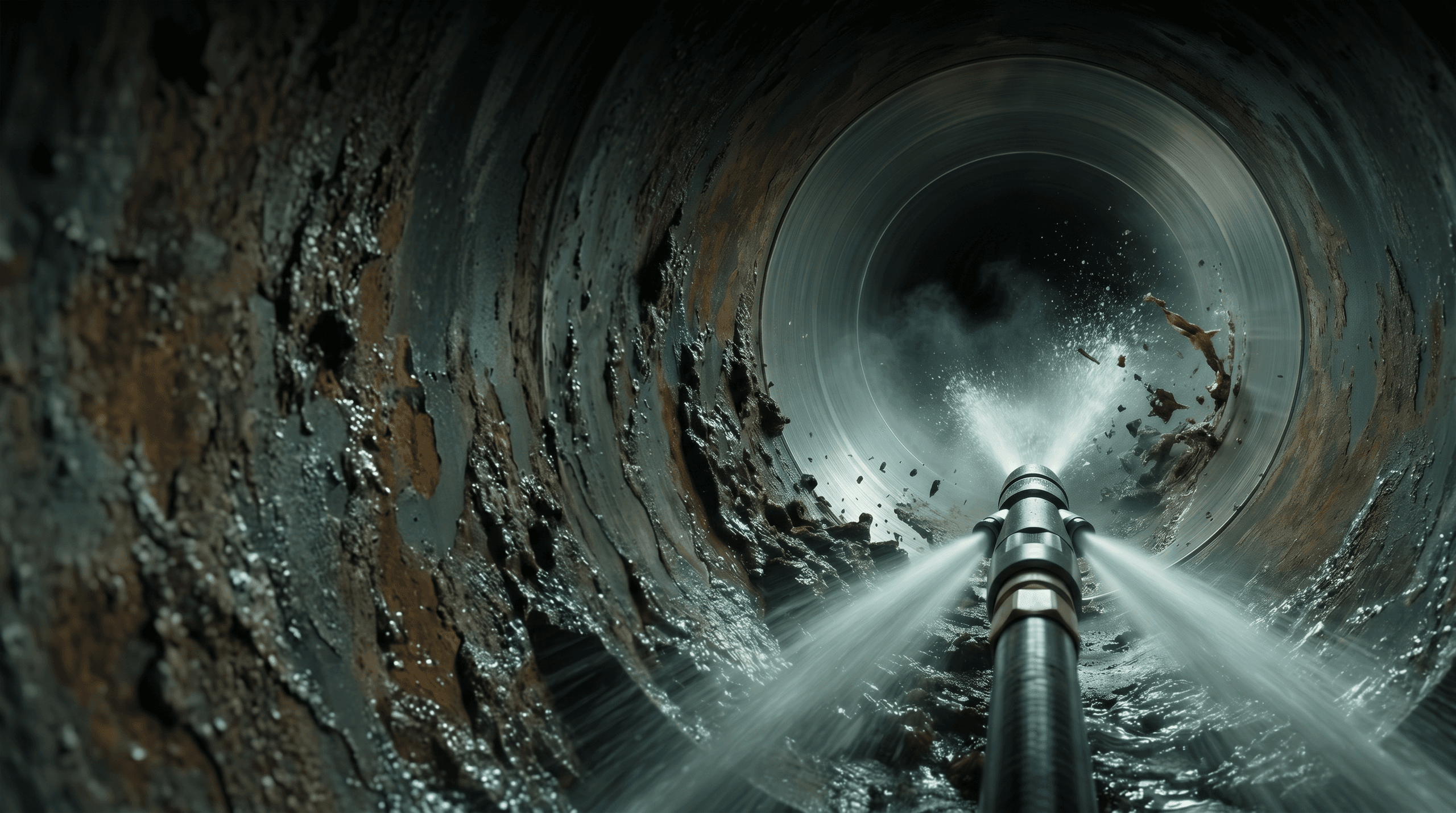
After cleaning, we run the camera again when the scope and access allow. The post-cleaning inspection shows the actual pipe surface and can reveal cracks, corrosion, holes, separated joints, offsets, or other defects that were hidden behind buildup.
Explain the Result
We explain what was removed, what the pipe looks like after cleaning, and whether the line requires maintenance, additional descaling, root treatment, lining, repair, or replacement. Cleaning restores the best available flow through the existing pipe. It does not hide defects that still need attention.
When cleaning exposes structural damage, we may recommend trenchless pipe lining, spray-in-place pipe lining, or sectional repair.
Equipment
The Correct Nozzle Matters
A hydro jetter is only as effective as the nozzle and technique used with it.
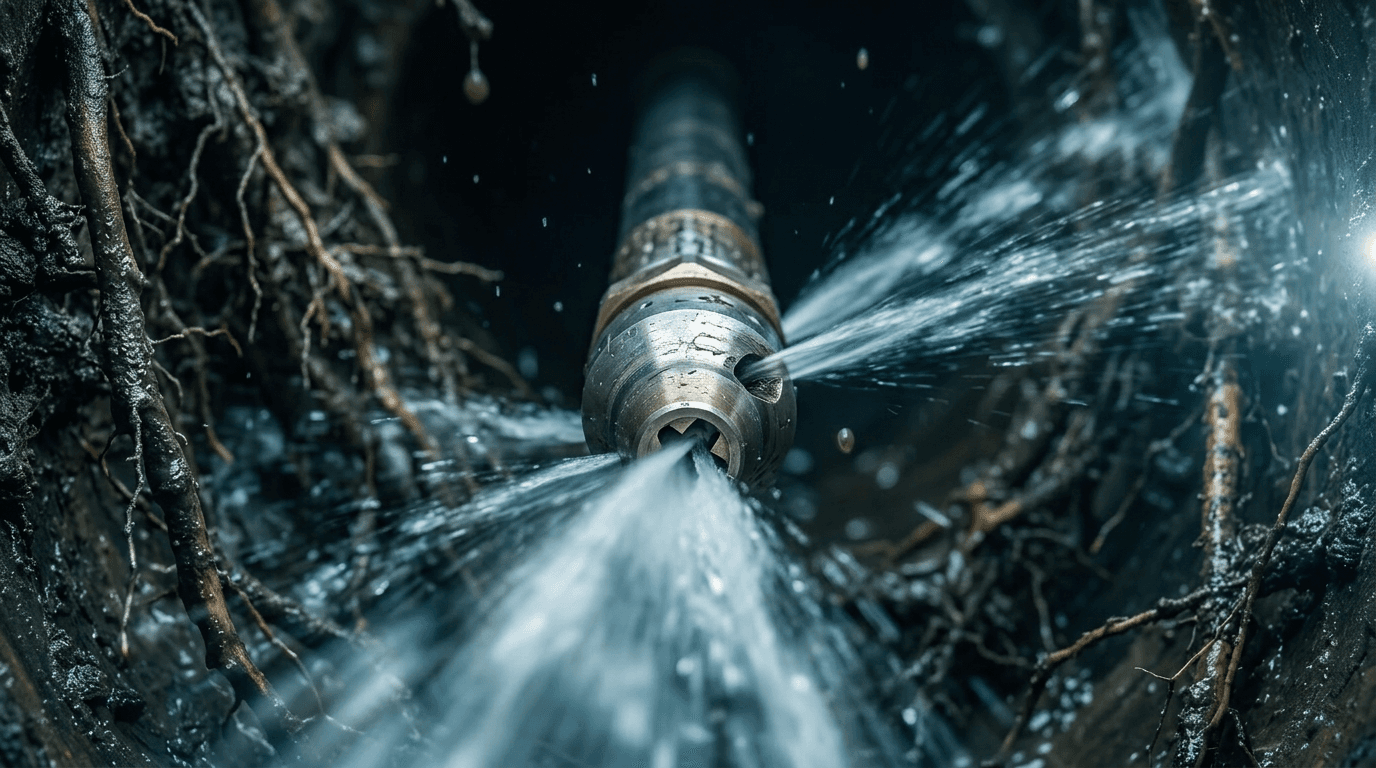
Different nozzle designs direct water in different patterns. Some penetrate blockages. Some flush soft material. Some cut roots. Some focus on pipe-wall cleaning. Some are designed for grease, sediment, larger-diameter pipe, or difficult bends.
The crew must also consider hose size, pump output, pipe diameter, access direction, debris type, and the condition of the pipe.
Penetrating Nozzles
Forward jets help create an opening through soft blockages, sludge, or packed material.
Flushing Nozzles
Rear-facing jets move the nozzle through the pipe and carry loosened material back toward the access point.
Grease Nozzles
Broad cleaning patterns help remove grease and organic buildup from more of the pipe wall.
Root-Cutting Nozzles
Specialized rotating or cutting heads can remove qualifying root masses and fibrous intrusion.
Descaling Tools
Mechanical chains, cutters, and specialized heads may be used with or instead of jetting to remove hard scale and corrosion.
Sand and Sediment Nozzles
High-flow configurations help move heavier material through larger pipes and flat sections.
Camera Equipment
Pre-cleaning and post-cleaning inspections help confirm the blockage, pipe condition, and cleaning result.
Locating Equipment
Camera transmitters and locating tools help identify the position and depth of buried defects.
The largest nozzle and highest pressure are not automatically the best choice. The equipment must fit the pipe and the work being performed.
Inspection
Cleaning Can Reveal the Real Pipe Condition
Heavy buildup often hides the defect that caused the blockage.
Roots may conceal a separated joint. Grease may cover a crack. Scale may hide wall loss in cast iron. Sediment may be collecting because the pipe has poor slope or an offset.
A camera inspection before cleaning helps plan the work. A camera inspection after cleaning shows what remains once the deposits are gone.
Jetters N' Drains uses the final inspection to answer practical questions:
- Is the line open through the cleaned section?
- Was the buildup removed?
- Are roots still visible?
- Is the pipe cracked?
- Are joints separated?
- Is cast iron heavily deteriorated?
- Is water standing in the pipe?
- Is the line deformed or offset?
- Does the pipe need lining or repair?
- Would maintenance cleaning help prevent another stoppage?
A clean pipe is easier to evaluate. It is also possible for cleaning to expose damage that was already present beneath the buildup.
Cast Iron
Hydro Jetting and Descaling for Cast Iron Pipe
Older cast iron drain and sewer piping often develops heavy internal corrosion.
The corrosion does not remain flat against the wall. It forms rough layers and hard scale that reduce the opening and catch paper, grease, and waste.
A normal cable may pass through the center while much of the scale remains attached to the pipe.
Jetters N' Drains can evaluate hydro jetting, chain cleaning, mechanical descaling, or a combined process to remove loose corrosion and restore more of the usable opening.
The pipe must be inspected carefully. Severe corrosion may leave thin walls, holes, cracks, or missing sections after scale is removed.
- inspect the existing cast iron
- identify pipe diameter and access
- remove loose debris
- select controlled descaling equipment
- clean the affected section in stages
- flush removed material
- reinspect the exposed pipe wall
- determine whether cleaning, coating, lining, or replacement is appropriate
Descaling does not replace missing pipe wall. It removes the buildup so the remaining condition can be evaluated and the next repair decision can be made accurately.
Root Removal
Removing Roots from Sewer Lines
Roots do not enter a sealed sewer pipe without a pathway.
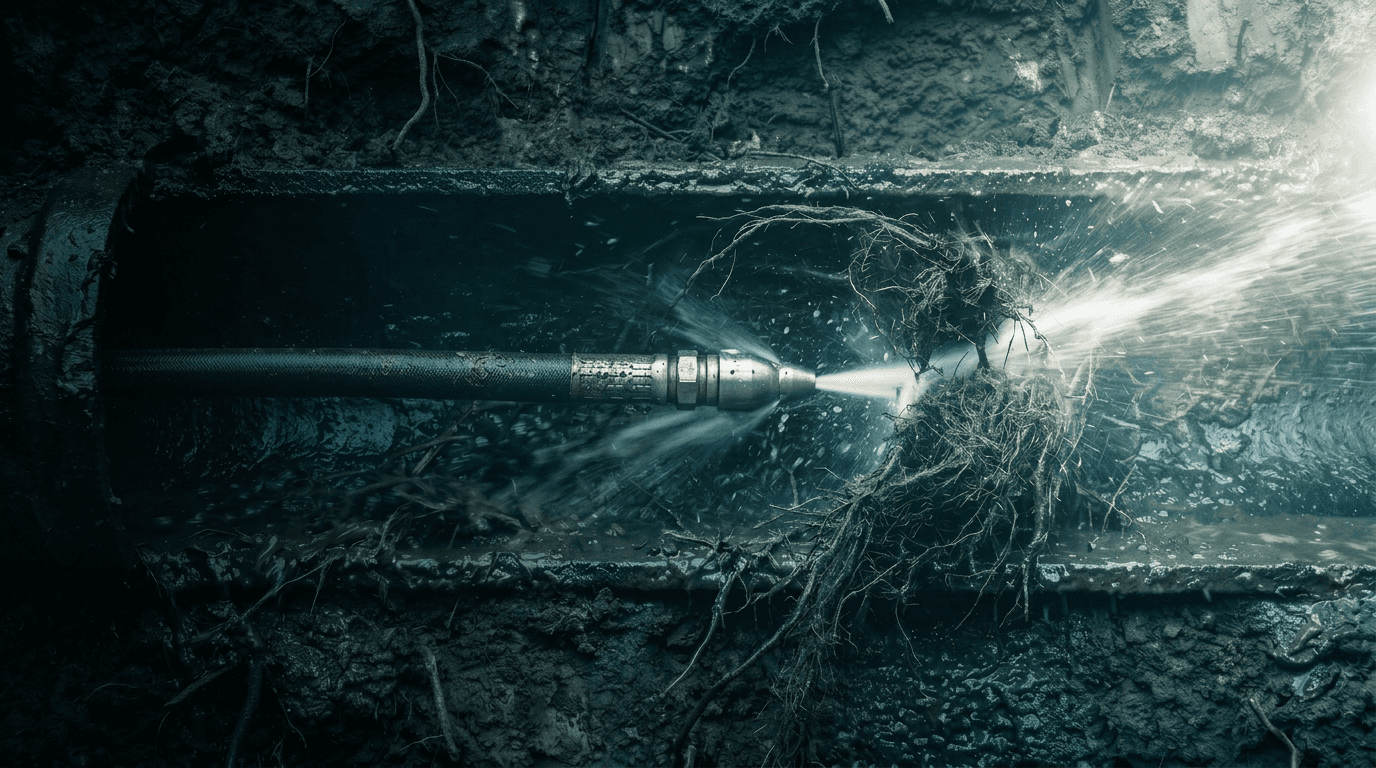
They usually grow through a crack, separated joint, damaged connection, or deteriorated section. Once inside, they spread through the pipe and catch paper and waste.
Jetters N' Drains can use mechanical cutters, root-cutting nozzles, hydro jetting, or a combination of methods to remove qualifying root intrusion. For robotic cutting on complex lines, see sewer robotics.
After cleaning, we inspect the entry location.
The line may need:
- periodic maintenance cleaning
- sectional repair
- trenchless pipe lining
- joint repair
- excavation
- pipe replacement
Root removal clears the intrusion. It does not repair the opening where the roots entered. Without a repair or maintenance plan, roots may return.
Commercial
Commercial Hydro Jetting and Drain Maintenance
Commercial drains often fail because of volume, repeated use, grease, food solids, cleaning products, sediment, and long service runs.
Restaurants, hotels, apartment communities, retail properties, institutional buildings, and industrial facilities may need scheduled maintenance beyond emergency clog removal.
Jetters N' Drains can clean and maintain qualifying:
- kitchen drain lines
- grease waste piping
- floor drains
- building drains
- sewer laterals
- main sewer lines
- vertical waste lines
- laundry drains
- apartment and condominium drain systems
- commercial restroom drains
- process drains where service conditions permit
Commercial cleaning may require after-hours scheduling, phased access, tenant coordination, wastewater control, grease containment, debris collection, and camera documentation. The cleaning plan must account for both the pipe and the way the property operates.
Residential
Drain and Sewer Cleaning for Homes
A home may have one clogged fixture, a blocked branch line, or a problem in the main sewer.
The symptoms can appear similar, but the correct repair is different.
Jetters N' Drains evaluates residential problems including:
- slow kitchen drains
- recurring laundry drain backups
- bathroom drain clogs
- floor drain backups
- gurgling toilets
- root-filled sewer laterals
- grease buildup
- cast iron scale
- under-slab drain restrictions
- main sewer blockages
- cleanout overflows
- repeated backups affecting several fixtures
We locate the affected section before recommending the cleaning method. A main sewer problem should not be treated like a simple sink clog, and a localized fixture blockage should not automatically become a full sewer-cleaning project.
Maintenance
Do Not Wait for the Next Emergency Backup
Some drain systems need scheduled cleaning because of how they are used.
Restaurants produce grease and food solids every day. Apartment properties have long shared lines and many users. Hotels, schools, healthcare facilities, and commercial kitchens cannot easily stop operations when a sewer backs up.
Preventive hydro jetting and camera inspection can help remove buildup before it becomes a complete blockage.
Potential maintenance applications:
- restaurant grease lines
- apartment and condominium mains
- hotel kitchen and laundry drains
- commercial building drains
- schools and campuses
- healthcare and institutional facilities
- retail centers
- industrial and warehouse drains
- properties with recurring root intrusion
- older cast iron systems
- high-use sewer laterals
The cleaning frequency should be based on actual system history, pipe condition, use, and inspection findings. Do not assign an arbitrary schedule without evaluating the property.
Limitations
When Cleaning Is Not Enough
Hydro jetting removes buildup and obstructions. It does not rebuild a failed pipe.
Jetters N' Drains may recommend repair instead of continued cleaning when the camera inspection shows:
- a collapsed pipe
- severe deformation
- a missing pipe section
- major joint displacement
- failed slope
- a significant belly
- active pipe movement
- severe wall loss
- repeated root entry through a structural defect
- a foreign object that cannot be safely removed
- concrete or hardened material bonded inside the pipe
- a blockage caused by a damaged fitting
- a line that cannot be safely accessed
- a pipe too fragile for the proposed cleaning method
When cleaning is not the correct answer, we explain what the camera shows and discuss trenchless lining, sectional repair, excavation, or replacement.
Results
What Proper Drain Cleaning Changes
The final result depends on the original pipe condition. Cleaning restores the available pathway through the existing pipe, but it does not correct structural damage or failed grade.
Before Cleaning
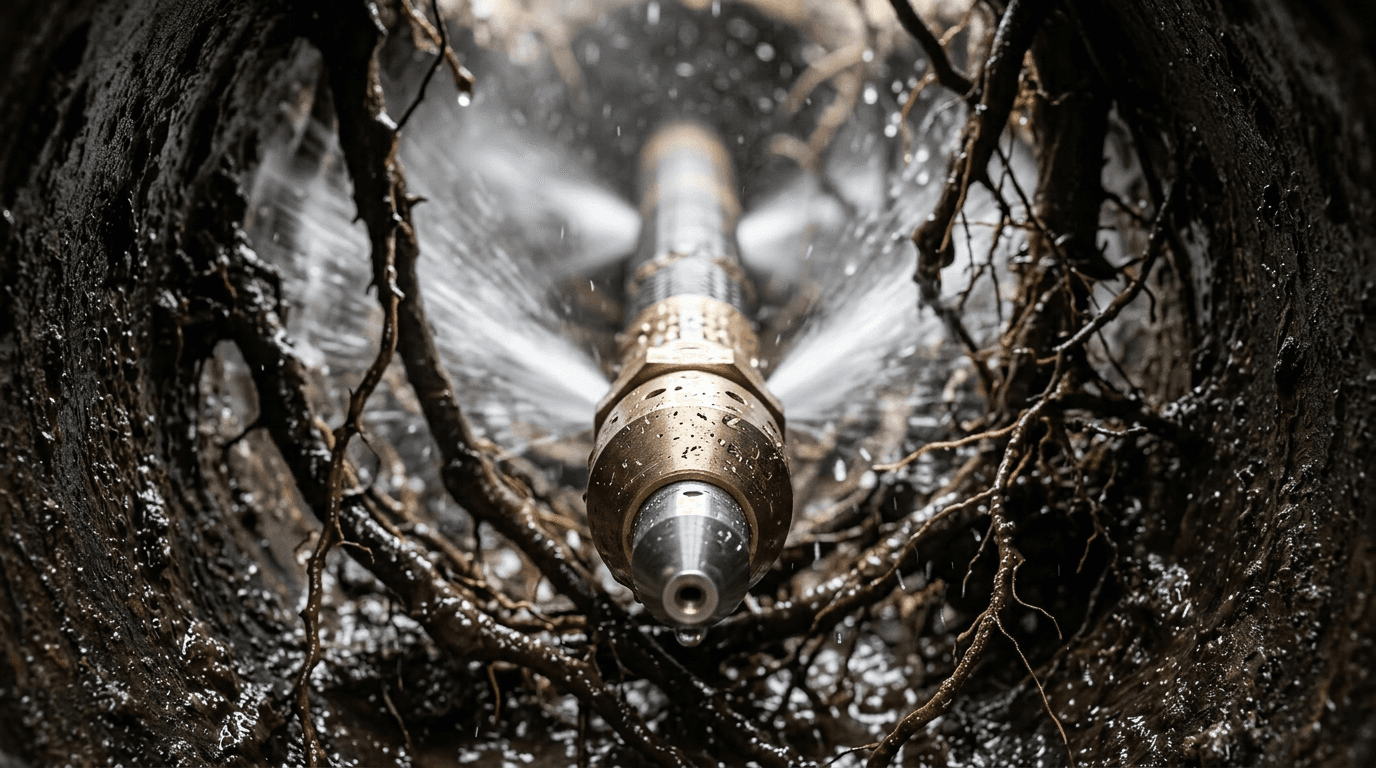
The pipe may contain grease, roots, sludge, scale, sediment, wipes, or debris. The remaining opening is restricted, and the rough material catches additional waste.
After Cleaning
The obstruction and qualifying deposits have been removed, the usable opening has been restored, and the exposed pipe can be inspected for cracks, corrosion, joints, and other defects.
Why Jetters N' Drains
Why Choose Jetters N' Drains for Hydro Jetting and Drain Cleaning?
Professional drain cleaning requires planning beyond feeding a hose into a pipe.
The crew must identify the affected line, understand the blockage, evaluate the pipe, choose the correct equipment, control the cleaning process, manage debris, and verify the result.
Jetters N' Drains handles the complete process.
We Diagnose Before We Clean
We determine whether the problem is in a fixture drain, branch line, building drain, or main sewer.
We Match the Tool to the Blockage
Grease, roots, scale, sludge, sediment, and foreign objects require different equipment.
We Use Controlled Cleaning
We select pressure, flow, nozzle type, hose size, and cleaning pattern based on the pipe.
We Combine Methods When Needed
Mechanical cabling, root cutting, descaling, hydro jetting, and camera inspection may all be used on the same project.
We Reinspect the Pipe
Post-cleaning camera work shows what was removed and what condition remains.
We Explain the Underlying Problem
If the pipe is cracked, offset, corroded, or failing, we explain why cleaning alone will not provide a permanent repair.
We Handle Residential and Commercial Systems
Our process can be adapted for homes, multifamily properties, restaurants, commercial buildings, and larger facilities.
We Build Maintenance Plans from Real Conditions
We base maintenance recommendations on use, history, buildup, and camera findings.
Orange County
Hydro Jetting and Drain Cleaning for Orange County Properties
Orange County properties contain a wide range of drain and sewer systems, from older cast iron and clay piping to heavily used commercial kitchen lines, apartment mains, and modern sewer laterals.
Restaurants and commercial kitchens face grease buildup. Older neighborhoods may have roots and deteriorated joints. Cast iron building drains can lose capacity to rust and scale. Multifamily and hospitality properties experience heavy daily use across shared piping.
Jetters N' Drains serves qualifying properties throughout Orange County, including Anaheim, Fullerton, Orange, Garden Grove, Santa Ana, Placentia, Buena Park, Irvine, Tustin, Huntington Beach, Costa Mesa, Newport Beach, Fountain Valley, Westminster, and Mission Viejo.
We do not assume every blockage needs the same machine. We identify the affected line, inspect the pipe when appropriate, and choose the cleaning method that fits the condition found.
Hydro Jetting and Drain Cleaning Questions
Do you service area drains, landscape drains, or irrigation?
What is hydro jetting?
Is hydro jetting better than snaking a drain?
Can hydro jetting remove roots?
Can hydro jetting remove grease?
Is hydro jetting safe for old pipes?
Can hydro jetting damage a pipe?
Does hydro jetting repair cracks?
Will hydro jetting stop roots from returning?
Can hydro jetting clean cast iron pipe?
How often should commercial drains be hydro jetted?
Can hydro jetting clear a completely blocked sewer?
Do you inspect the pipe after hydro jetting?
Can hydro jetting fix a sewer belly?
Does hydro jetting use chemicals?
How long does hydro jetting take?
Resources
Related Guides
Hydro Jetting vs Snaking: Which Method Fits Your Sewer Line?
Compare cable snaking and hydro jetting for Orange County sewer backups. When jetting is the right next step after a recurring clog.
Read guideRoots in Sewer Lines: What Jetting Can and Cannot Fix
How root intrusion forms, when hydro jetting clears it, and when the pipe needs structural repair.
Read guideWhen Cast Iron Sewer Lines Fail in Older Orange County Homes
How cast iron corrodes, what symptoms look like, and how inspection and trenchless repair fit older OC neighborhoods.
Read guide
Next Step
Clear the Line and Find Out Why It Clogged
Do not keep paying to open the same small path through the same blockage. Jetters N' Drains can identify the affected line, remove grease, roots, scale, sludge, sediment, and qualifying obstructions, then inspect the pipe to determine whether cleaning solved the problem or exposed a repair that still needs attention.
Serving Orange County and surrounding Southern California communities within our established service area.